




Fitness Flohmarkt · Guide
Lifting straps and wrist wraps: when they are useful
Two textile bands for CHF 17.– in total that solve two completely different problems. Mix them up, and you'll buy the wrong one and keep training with the same limitation.
In short
Lifting straps are useful as soon as your grip fails before the target muscles during a pulling exercise, typically during heavy deadlifts, rows, and lat pulldowns. Wrist wraps are useful for pressing and overhead exercises when the wrist bends backward under load. Both are tools for individual heavy sets, not standard accessories for every workout. Both cost under CHF 10.- per pair.
The most common confusion
What is the difference between lifting straps and wrist wraps?
lifting straps, as a Fitness Flohmarkt Basic Lifting Straps in our assortment, you will find textile straps that you place around your wrist and then wrap around the bar. They transfer the load from your grip to your wrist and forearm so your fingers don't give out before your back is done. Wrist wraps, on the other hand, don't touch the bar at all. They are wrapped tightly around the wrist, secured with Velcro, and stiffen the joint so it doesn't bend backward under pressure. The difference therefore lies in where the force goes: lifting straps close the loop between hand and bar, while a wrap only stabilizes the axis between forearm and hand. Lifting straps help with pulling, wraps with pushing and overhead holding. Anyone who confuses the two buys an aid that does nothing to change their own weakness. You can find both products in our Fitness Accessories Category and, together with the rest of the competition equipment, in the Weightlifting category.
| Feature | Lifting Straps | Wrist wraps |
|---|---|---|
| Purpose | relieve the handle | stabilize joint |
| Pole contact | yes, wrap it | no |
| Mass | 61 x 4 cm | 30 x 8 cm |
| Thickness | 3 mm | 2.5 mm |
| Material | cotton, tear-resistant | elastic fabric |
| Closure | self-tightening loop | thumb loop and Velcro |
| resilience | 300 kg per strap | No load specification required |
| Typical exercises | Deadlifts, rowing, lat pulldowns | Bench press, overhead press, front rack |
| Price per pair | CHF 9.- | CHF 8.00 |
The right time
When do you actually need lifting straps?
You need lifting straps when your grip fails during a pulling exercise before the target muscles do. The signal is clear: the bar is slipping from your fingers even though your back and legs still have two to three clean repetitions left in them. This is typical during heavy deadlifts, barbell rows, lat pulldowns, and long sets with dumbbells. As long as this signal is absent, you do not need lifting straps. In warm-up sets and with moderate loads, they are even counterproductive because they take grip strength out of the training, which is worked anyway during every pulling exercise. The honest sequence is therefore: first technique and grip type, then chalk or mixed grip, and only when both are no longer enough, the straps. The Cotton lifting straps are rated at 300 kg per strap, so theoretically a pair holds 600 kg. The material is therefore never the limit, your back is.
A common misconception concerns pull-ups. Anyone who falls off the bar after three repetitions usually does not have a grip problem, but rather too little pulling strength. A strap won't change that, but a band under the knee will. Which band relieves how much body weight is stated in the Resistance Bands Buying Guide.
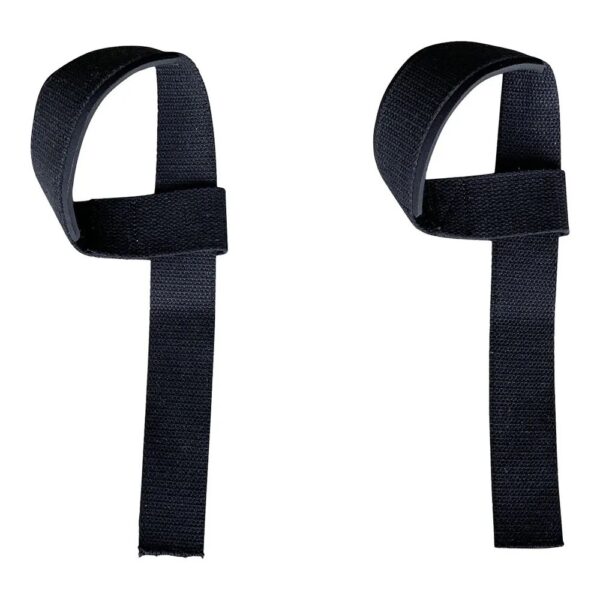
Basic Lifting Straps | Pulling Straps
- 61 x 4 cm
- 3 mm thick
- Cotton
- max. 300 kg
- Set of 2
- CHF 9.-
Classic loop design made of slip- and tear-resistant cotton. The 4 cm width distributes the pressure across the palm, the 61 cm length is enough for multiple wraps around the bar. One size fits all, price per pair.
Ideal for: Deadlifts, rows, and lat pulldowns when the grip gives out before the back.
View lifting strapsThe other construction site
When do you need wrist wraps?
You need wrist wraps for pressing and overhead exercises as soon as the wrist bends backward under load. During heavy bench presses, overhead presses, front squats with the bar on your shoulders, and handstand push-ups, the weight does not rest cleanly in the palm of your hand, but instead tips toward the forearm. The wrap keeps the hand and forearm in alignment and distributes the pressure over a broader surface. The benefit is mechanical, not muscular: you do not get stronger, you simply lose less force to an unstable axis. For warm-up sets and technique work, the wraps should be taken off again, otherwise the joint gets used to the support and your own stability falls by the wayside. A second sign besides the bending is a dull pressure at the wrist that lingers for a while after the set. The Wrist Wraps from Fitness-Flohmarkt are 30 cm long and 8 cm wide. With a wrist circumference of around 17 cm, that is enough for just under two wraps plus Velcro, so for a training support rather than competition stiffness.
Anyone planning for a competition checks the regulations of their association beforehand, because the length and width of wraps are prescribed there. And anyone who has chronic pain in their wrist gets it checked out instead of constantly wrapping the joint. A wrap bridges a peak load; it doesn't treat anything.
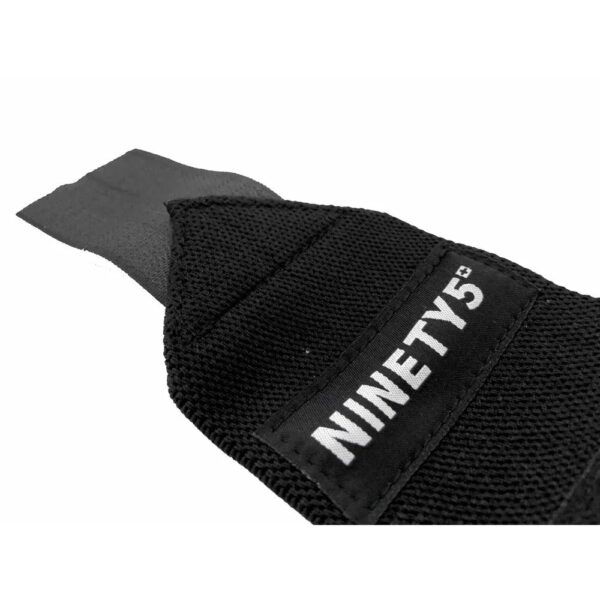
Wrist Wraps | Wrist bandages
- 30 x 8 cm
- 2.5 mm thick
- elastic
- Thumb loop
- Velcro fastener
- CHF 8.00
Elastic bandage with thumb loop and wide hook-and-loop fastener. The 8 cm contact surface stabilizes the axis between hand and forearm without completely blocking the joint. Opened in seconds between sets. Price per pair.
Ideal for: Bench press, overhead press, front rack, and handstand work.
View Wrist WrapsSkill instead of guesswork
How to put on lifting straps correctly: a step-by-step guide
Applying lifting straps correctly takes less than ten seconds after a little practice, but it determines whether they hold or slip. The most common mistake is the wrong wrapping direction: if the loose end points in the opposite direction of your closing fingers, the strap will open up again under tension. The second most common mistake is a first wrap that is too loose, because then the strap rolls up when lifting instead of tightening. As a rule of thumb: the loose end must point in the direction your fingers close, and the barbell is rotated backward with your hands once before the first pull until everything is tight. The third mistake is the remaining length. Anyone who crumples the excess strap in their hand is sitting on a bulge that shifts when pulling and loosens the whole construct again. It is better to make one more wrap and let the strap taper off neatly. The following steps apply to the classic loop shape, as they have most lifting straps in their assortment.
- Pull the strap through its own loop to form a ring.
- Slide the ring over your hand up to your wrist and tighten it. The loose end should lie on the palm side.
- Grab the bar and guide the loose end from the outside to the inside around the bar.
- Wrap two to three times until the tape is taut. Do not crumple the remaining length in your hand.
- Turn the rod backward by hand until the tape tightens, then lift it.
Wrist wraps are applied differently, even though they sit on the same joint: thumb loop over the thumb, then wrap starting from the middle of the joint, with the final layer being the tightest. The wrap is meant to provide support and not constrict. Tingling or pale fingers after a set mean: too tight. Between sets, the velcro is opened.
Before buying
What should you look out for when buying lifting straps?
When buying lifting straps, four features matter, and price is not one of them. First, the material: cotton grips the bar well and feels comfortable against the skin, nylon is smoother and more abrasion-resistant, and leather offers the best grip and is the stiffest. Second, the length, because it determines how many times you can wrap the bar; under 50 cm it gets tight. Third, the width, because a wide strap distributes the pressure and cuts into the palm less. Fourth, the design: classic loops are universal and can be let go of in an emergency, Figure-8 loops hold more but prevent exactly that release, and hooks take all the work away from the hand. For beginners, the classic cotton loop is the right choice because it covers all three pulling exercises and can be quickly dropped from the hand if in doubt. At Fitness-Flohmarkt, it is priced at Accessories for dumbbells and weights, along with closures, neck pads, and handles.
| Exercise | Lifting straps | Wrist wraps | Why |
|---|---|---|---|
| Deadlift, heavy sets | sensible | no | The grip is the bottleneck, not the joint |
| Barbell row | sensible | no | long sentences tire the grip first |
| Lat pulldown, high repetitions | sensible | no | The back should tire before the fingers |
| Bench press, heavy sets | no | sensible | Wrist bends under the bar |
| Overhead press | no | sensible | Load is directly above the joint |
| Front Squat, Front Rack | no | sensible | Wrist in extreme extension |
| Farmers Carry | no | no | the grip is the training goal here |
| Kettlebell Swing | no | no | Grip replacement must be possible at all times |
The honest countersuit
When lifting straps are the wrong solution
Lifting straps are the wrong solution if you use them in every set. Grip strength is the only skill in strength training that can be completely removed from training without anyone noticing. Anyone who trains every back day with straps for a year will lift more and hold less in the end. This leads to a simple rule: straps only for the heaviest one to two sets of a pulling exercise, everything before that without them. For exercises whose very purpose is holding, they are left out completely. Farmers walks, kettlebell swings, hanging from the bar, and rack holds are trained without equipment, or you do not train them at all. And if the bar is already slipping at moderate loads, it is often due to sweaty hands rather than weak fingers. Then chalk helps more than any strap, as well as a bar whose knurling has not been clogged up for years.
If a stronger grip is the goal, there is the reverse tool: thicker slip-on grips turn every pulling exercise into a forearm exercise, and one Manual tongs with compression steel spring trains the fist closure directly. Both complement heavy compound exercises, but do not replace them. Anyone who is similarly unsure about other product groups will find in the Overview of all buying guides the appropriate decision support tool.
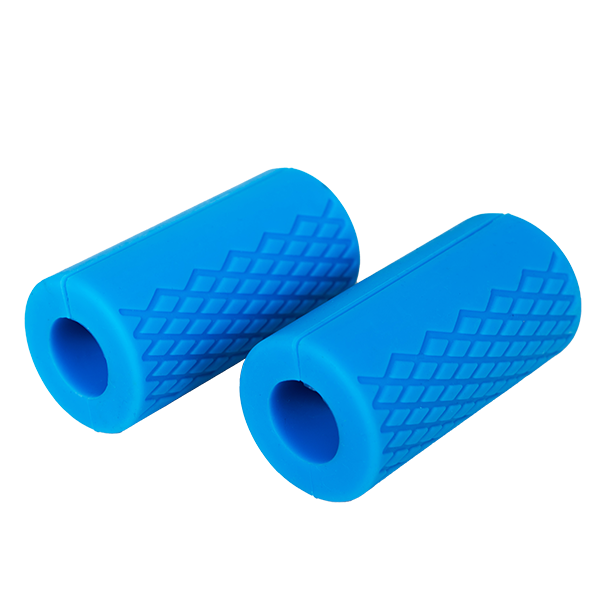
Fat Gripz | pair of dumbbell grips
- 10 cm long
- 5 cm diameter
- Rubber
- blue
- Set of 2
- CHF 15.-
Two rubber sleeves that slip onto a barbell bar, dumbbell, or cable handle and significantly increase the grip diameter. The opposite of a pull-up aid: The exercise becomes harder—not easier—for the hand and forearm. Price per pair.
Ideal for: Rowing, curls, and pull-ups if you want to train your grip at the same time.
View Fat Gripz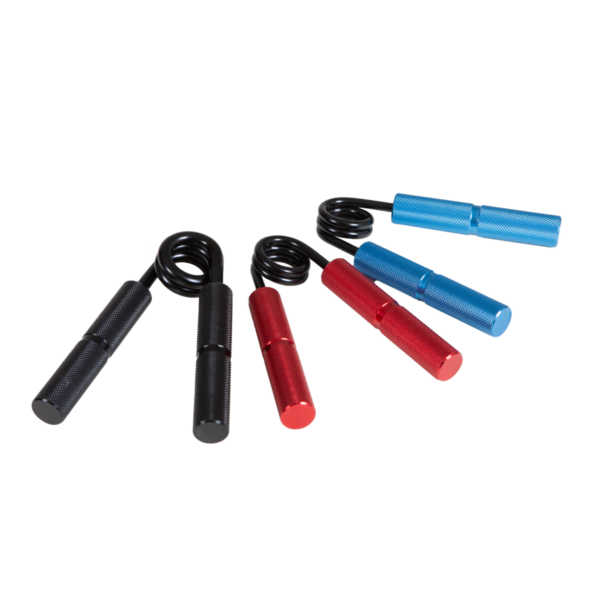
Hand trainer | grip strength training
- 14 cm long
- Aluminum
- Compression Steel Spring
- soft, medium, hard
- CHF 8.00
Hand grip with a compressed steel spring, available in three levels of resistance. Helps strengthen your grip anywhere, not just at the gym, and can also be used for rehabilitation after an injury. Price is per piece; order two for both hands.
Ideal for: Grip strength in between, climbers and rehab by arrangement with the specialist.
View Hand TrainersRecommendation Based on Training Profile
What is worth it for whom
If you're working out at home with light to moderate weights, you don't need either one. If you're competing, you usually have both in your bag. The majority falls somewhere in between, and that's where your choice of exercises makes the difference.
Getting Started in Your Home Gym
First six to twelve months, focus on technique and moderate loads. Don't buy any of that yet. If you want to do something, then for the grip itself: a Hand exerciser for CHF 8.00 costs less than a cup of coffee out.
Deadlifts and Back Day
You're pulling too hard and losing your grip on the bar before your back is ready. Here are Pulling aids for CHF 9.00 the right choice, used in the last one or two sentences and not during the warm-up.
Press and overhead
Bench Press, Push Press, Front Rack: If your wrist bends under load, these exercises can help Wrist wraps for CHF 8.00. They come on for the heavy sets and then come off again afterward.
Grip strength as a training goal
Obstacle courses, climbing, strongman competitions: Here, the grip isn't the problem—it's the task itself. Fat Gripz for CHF 15.00 turn the logic on its head and turn every pulling exercise into a forearm workout.
Frequently Asked Questions
Traction Devices and Bandages: The Most Important Answers
When should you use lifting straps?
Then, when the grip fails during a pulling exercise before the target muscles do. Specifically: the bar slips out of the fingers even though the back and legs still have two to three more repetitions in them. This is useful in the heaviest one to two sets of deadlifts, rows, or lat pulldowns, not in the warm-up and not at moderate loads.
How do you put on lifting straps correctly?
Pass the strap through its own loop, slide the ring over the hand onto the wrist, and tighten it. The loose end rests on the palm side and is wrapped two to three times around the bar from the outside in. Then rotate the bar back with your hand until the strap is taut. The wrapping direction is important: the loose end points in the direction the fingers close.
Are lifting straps bad for grip strength?
Only with continuous use. Grip strength develops as a byproduct of every pulling exercise, and lifting straps take away precisely this byproduct. Anyone who restricts their use to the heaviest sets loses nothing. Anyone who pulls every set with them will be lifting more after a year and holding less. Holding exercises like the farmer's walk should fundamentally be trained without straps.
What is the difference between lifting straps and wrist wraps?
Lifting straps are wrapped around the bar and relieve the grip during pulling exercises. Wrist wraps do not touch the bar, but instead stiffen the wrist during pushing and overhead exercises. Lifting straps help with pulling, wraps with pushing. At Fitness-Flohmarkt, lifting straps cost CHF 9 and wrist wraps cost CHF 8, each per pair.
How tightly do wrist wraps need to fit?
Tight enough so that the joint no longer hyperextends under load, and loose enough to maintain proper blood circulation. Tingling or pale fingers after a set are a sign that it is too tight. Between sets, the Velcro is opened so that the wrap does not cut off circulation throughout the entire training session.
Which lifting straps are suitable for beginners?
The classic cotton loop. It can be quickly released in an emergency, is comfortable against the skin, and is forgiving of setup errors. Figure-8 loops and hooks hold more, but prevent quick release and are the wrong choice for beginners. The standard is: at least 50 cm in length and around 4 cm in width.
Both together under CHF 20.-
Pull-up aids and wrist wraps are in stock in Liestal and will be included in your next package. You can find everything else related to grips and joints in our accessories section.
View Accessories