



Which Kettlebell
Is this the right one?
Cast iron, rubber-coated, competition, urethane, or soft — five variants, one goal: the barbell plate that fits your training, your floor, and your budget. This guide categorizes the differences and names the right model for every case.
For most, the Cast-iron kettlebell the best choice: robust, affordable, and available in many weights. If you want to protect the floor, choose the variant with a rubber coating or a Soft-Kettlebell; who is technically trained or participates in competitions that Competition kettlebell with a uniform size.
To the polls in 10 seconds
What suits you?
Basics
What makes a kettlebell special
The kettlebell is a spherical weight with a handle. Unlike the dumbbell, the center of gravity outside the hand — the mass hangs below the handle. Exactly this makes it ideal for dynamic, sweeping movements like the swing, where the weight is guided through space and the body develops power from the hips.
Three things are crucial for your training: Material (determines durability, soil and noise protection as well as appearance), which Size per weight (does the ball grow with the weight or stay the same?) and the Handle (thick, growing handles for cast iron; slim, uniform ones for competition). The five variants differ along these three axes.
The five variants in detail
From beginner to competition
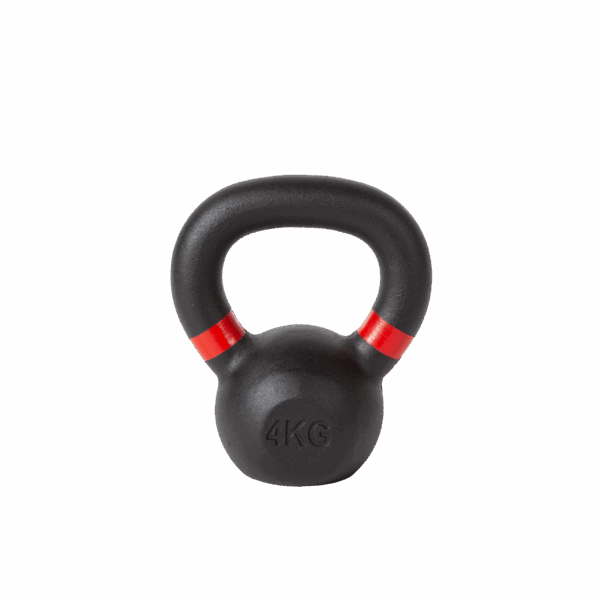
Cast Iron from CHF 16.-
The classic and the best value for money for serious training. Cast in one piece, without weld seams — practically indestructible. The bell and handle grow with the weight, which feels good for heavy two-handed swings. From 4 to 48 kg, the largest weight range in the assortment.
Ideal for: everyone looking for a reliable all-around kettlebell for their home gym or studio who wants to increase their weight over the years.
Watch Cast Iron
With rubber coating from CHF 10.-
The same cast iron base as the Cast Iron kettlebell, featuring an added rubber coating to protect floors and workout areas while dampening noise when set down. The most affordable „real“ kettlebell in the lineup and an ideal entry point. NoteAs an entry-level model, small casting marks may occur on the handle due to production reasons.
Ideal for: Beginners and budget-conscious individuals who want to protect the floor—such as in the basement, in the apartment, or on sensitive surfaces.
View rubber jacket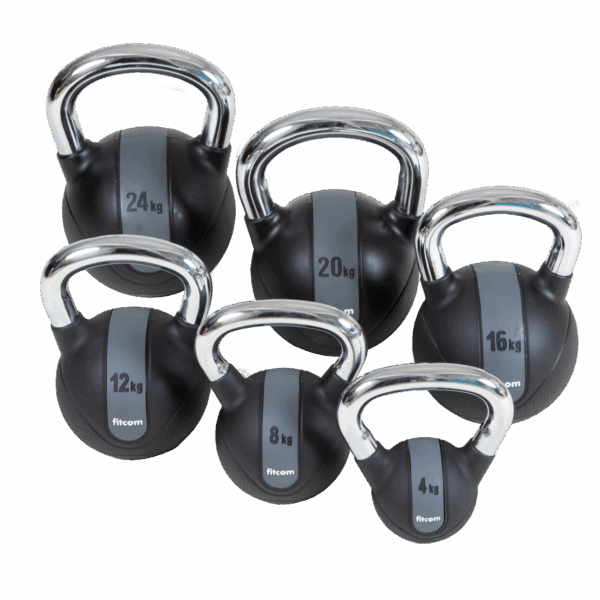
Premium Urethane from CHF 20.-
The premium version: The durable urethane coating is exceptionally scratch- and abrasion-resistant and retains its shape and attractive appearance even with intensive use in the gym. The wide, smooth steel handle fits comfortably in the hand without irritating the skin.
Ideal for: Gyms and ambitious home gyms that prioritize durability, smooth operation, and a high-quality look.
View Urethan Premium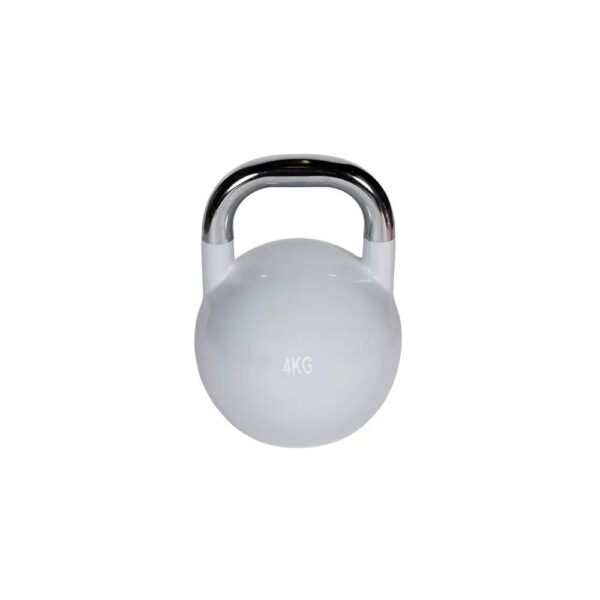
Competition from CHF 40.-
According to international competition standards: size and grip remain at everyone Same weight—an 8-kg kettlebell and a 32-kg kettlebell are the same size. This keeps your form consistent as you increase the weight, a crucial advantage in kettlebell training. Color-coded to industry standards, with a slim 33-mm handle for high rep counts.
Ideal for: Technique-focused training, systematic progression, and anyone with competitive aspirations in kettlebell sports.
View competition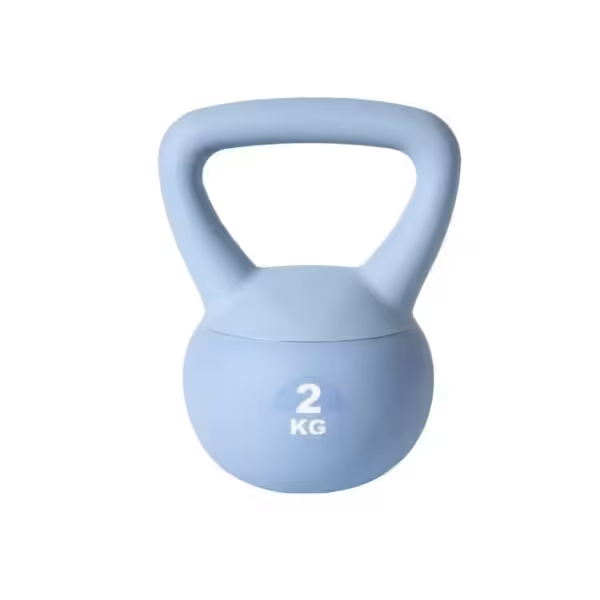
Soft Kettlebell from CHF 12.-
Sand-filled core, rubber-coated ball, plastic handle: the gentlest option. If it does happen to fall, it causes little damage to the floor or your feet. The gradual weight increments from 2 to 12 kg make them ideal for beginners, for rehabilitation and physical therapy, as well as for group and home workouts on sensitive surfaces.
Ideal for: Beginners, those in rehab or physical therapy, people who work out at home, and anyone who wants light weights and maximum floor protection.
View Soft KettlebellEverything side by side
A Comparison of the Variants
| Variant | Material | Weights | Amount per kg | Soil and Noise Protection | Starting at | Ideal for |
|---|---|---|---|---|---|---|
| Cast Iron | Cast iron | 4–48 kg | grows with weight | low | CHF 16.00 | All-around, serious training |
| Rubber sheath | Cast iron + rubber | 4–40 kg | grows with weight | good | CHF 10.00 | Affordable entry point, floor protection |
| Premium Urethane | Urethane + steel handle | 4–32 kg | grows with weight | good | CHF 20.00 | Studio-quality look, durability |
| Competition | Cast steel | 4–32 kg | always the same | low | CHF 40.- | Technique, Kettlebell Sport |
| Soft | Sand + Rubber | 2–12 kg | grows with weight | very good | CHF 12.00 | light, rehab, home |
The right weight
What weight to start with?
The most common question — and the most important one. As a rule of thumb: For dynamic exercises from the hips (swing), it can be significantly heavier than for overhead pressing movements like the shoulder press. It is better to start a little heavier than too light: A kettlebell that is too light tempts you to pull the swing with your arms instead of from your hips.
Beginner women
Beginner men
What you need her for
The most important exercises
Swing
The ultimate exercise: explosive from the hips, trains the entire posterior chain and conditioning.
Goblet Squat
Goblet squat — ideal for building proper squat technique.
Clean & Press
From the floor to the shoulder and overhead: full-body strength in one movement.
Turkish Get-up
From lying to standing with the kettlebell overhead — stability, mobility, and control.
Snatch
In one motion from the floor to the top: the most demanding sports exercise for power and endurance.
Row & Deadlift
Rowing and deadlifts with the kettlebell — back and leg strength without needing much space.
Frequently Asked Questions
Kettlebell purchase: the most important answers
Which kettlebell is the best for beginners?
For most beginners, the cast-iron kettlebell (Cast Iron) the best choice: robust, durable, and with the best price-performance ratio. If you want to protect the floor or start on a budget, choose the variant with a rubber coating. For very light training or rehab, the Soft Kettlebell.
What weight should I choose as a woman or man?
As a rough rule of thumb: women start with 8 kg, men with 12–16 kg for swings and squats. For overhead pressing exercises, choose something slightly lighter. If you are buying only a single kettlebell, 8 kg (women) or 16 kg (men) is the proven starting point for a full-body routine. It is better to start a bit heavier than too light — with the swing, the power comes from the hips, not the arms.
Cast iron or rubber coating — what is the difference?
Both have the same cast iron core. The Version with rubber coating also features a rubber coating that protects the floor and training surface and dampens noise when set down — ideal for apartments or basements. The bare Cast Iron is somewhat more robust for continuous use and is available in a wider weight range up to 48 kg.
What are the benefits of a competition kettlebell?
At the Competition kettlebell do all weights have the same size and handle — an 8 kg and a 32 kg ball are the same size. This keeps your technique constant as you progress, meaning you don't have to relearn the swing, clean, or snatch with every weight. This is the decisive advantage in kettlebell sport and in technical, highly repetitive training. It is not necessary for pure home fitness.
Why is one kettlebell more expensive than the other?
The price depends on the material and manufacturing: rubber-coated cast iron is the most affordable, closely followed by bare cast iron. The urethane variant costs more because the coating is particularly scratch-resistant and durable. The competition kettlebell is the most complex because every ball is manufactured to the same size according to competition standards—lighter balls must be specially constructed on the inside for this purpose.
Can I use a kettlebell on parquet or tile?
Yes, but protect the floor. The gentlest are the Soft- and the rubber-coated variant. With bare cast iron and competition balls, you should only set them down in a controlled manner and for heavy sets use a Rubber flooring place underneath — that protects tiles, parquet, and the ball itself.
How many kettlebells do I need?
For starters, one is enough. Once you master the technique, two to three weights are useful: a lighter one for overhead pressing exercises, a heavier one for swings and squats. Anyone who trains regularly will build up a small collection over time. For proper storage, a Kettlebell Rack.
Kettlebell or dumbbell — which is better?
They complement each other. The kettlebell plays to its strengths in dynamic, sweeping full-body movements from the hips (swing, snatch, clean) and trains strength and conditioning at the same time. The dumbbell is more precise for isolated strength exercises. For functional training, strength endurance, and limited space, the kettlebell is often the more versatile and efficient choice.
Ready for your kettlebell?
Alle Varianten und Gewichte findest du versandbereit ab unserem Schweizer Lager — in 1–3 Arbeitstagen bei dir.
Buy kettlebells