


Fitness Flohmarkt · Guide
Dumbbell shoulder press: seated or standing?
You can perform dumbbell shoulder presses seated against a backrest or standing without a bench. The backrest adds support; standing asks you to steady your torso more yourself. Choose according to your control, space and equipment. Learn the setup, starting position and pressing path before adding weight.
In short
Start with two light dumbbells of equal weight beside your shoulders. Keep your wrists above your elbows and press overhead under control without arching your lower back. Return to the start. A steep backrest provides more support; without a bench, use the same basic movement in a stable standing position.
Seated or standing: which variation suits you?
| Variant | Why choose it | What to check |
|---|---|---|
| Seated with a backrest | More support and a repeatable position, useful when learning the pressing path. | Backrest and seat locked, feet on the floor and back comfortably supported. |
| Standing | No bench needed. You practise overhead pressing while stabilising your own torso. | Stable footing, enough ceiling clearance and no leg or hip drive. |
Neither variation is automatically better for muscle growth. Choose the one that lets you repeat the path and position your dumbbells under control. Sitting does not remove all lower-back loading, and standing does not require maximal weight to be useful.
Set your bench angle, feet and dumbbells
For the supported version, set the backrest steeply. Around 80–90 degrees from horizontal is a practical starting range, not a requirement for everyone. Choose an available setting that lets you sit comfortably upright. A much flatter backrest moves towards an incline chest press. Adjust the bench without load and check its lock.
Sit with your pelvis on the seat and your back and pelvis steady against the backrest, with both feet firmly on the floor. Standing, use roughly hip-width feet or a small staggered stance. Keep your rib cage over your pelvis instead of pushing your ribs forward as you press.
Bring the dumbbells beside your shoulders under control. Choose a load you can also pick up and put down properly. Avoid bending your wrists far back; keep your elbows under your hands and slightly in front of your torso if comfortable. A slightly inward-facing grip can feel better than forcing your elbows straight out to the sides.
Dumbbell shoulder press step by step
- Brace your torso and start with the dumbbells around shoulder height. Check overhead clearance for the whole movement, not just your hands.
- Press both dumbbells upwards as you breathe out. Extend your arms over your shoulders without snapping your elbows into a lock. The dumbbells do not need to touch.
- Keep your torso as consistent as practical. Increasing back arch, a backwards lean or leg drive indicates that the load or range needs adjusting.
- Lower calmly beside your shoulders as you breathe in. Use a controllable range rather than forcing a specific elbow depth. Finish the set before you can no longer lower the weights under control.
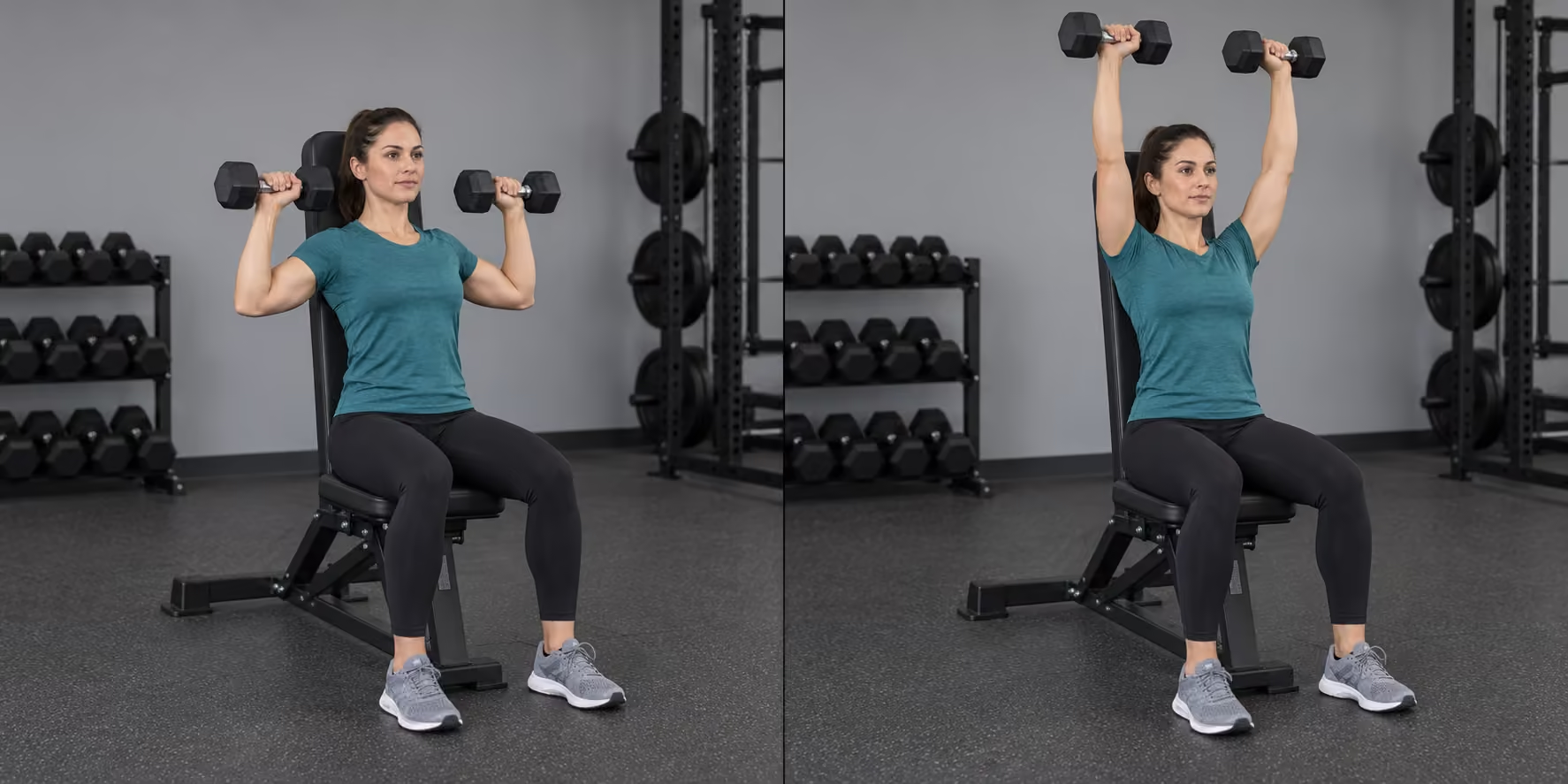
The movement mainly trains the front of your shoulders, with your triceps and other shoulder-girdle muscles helping. It does not replace every exercise for the side and rear shoulders. This standing version remains a controlled press without leg drive; a push press is a different variation.
Common mistakes: control before more weight
| What you notice | How to adjust |
|---|---|
| A large back arch as you press | Reduce the load, steady your torso and try backrest support if useful. Do not keep flattening the backrest just to lift more. |
| Your wrists bend far back | Check your grip and weight. Keep the dumbbell broadly aligned with your forearm and wrap your thumb around the handle. |
| Your legs drive the weights up | Use less weight and keep your knees steady. This version uses controlled repetitions without leg drive. |
| One side races ahead or the dumbbells collide | Slow down, reduce the load and keep separate paths above your shoulders. Stop the set if you feel pain. |
As a learning example, try two sets of 8–12 calm repetitions. Use a light enough weight to control the final lowering phases and put the dumbbells down properly. This is an adaptable suggestion, not a fixed weight or repetition requirement. Increase once your setup and path stay repeatable.
Suitable equipment: two dumbbells, a bench if needed
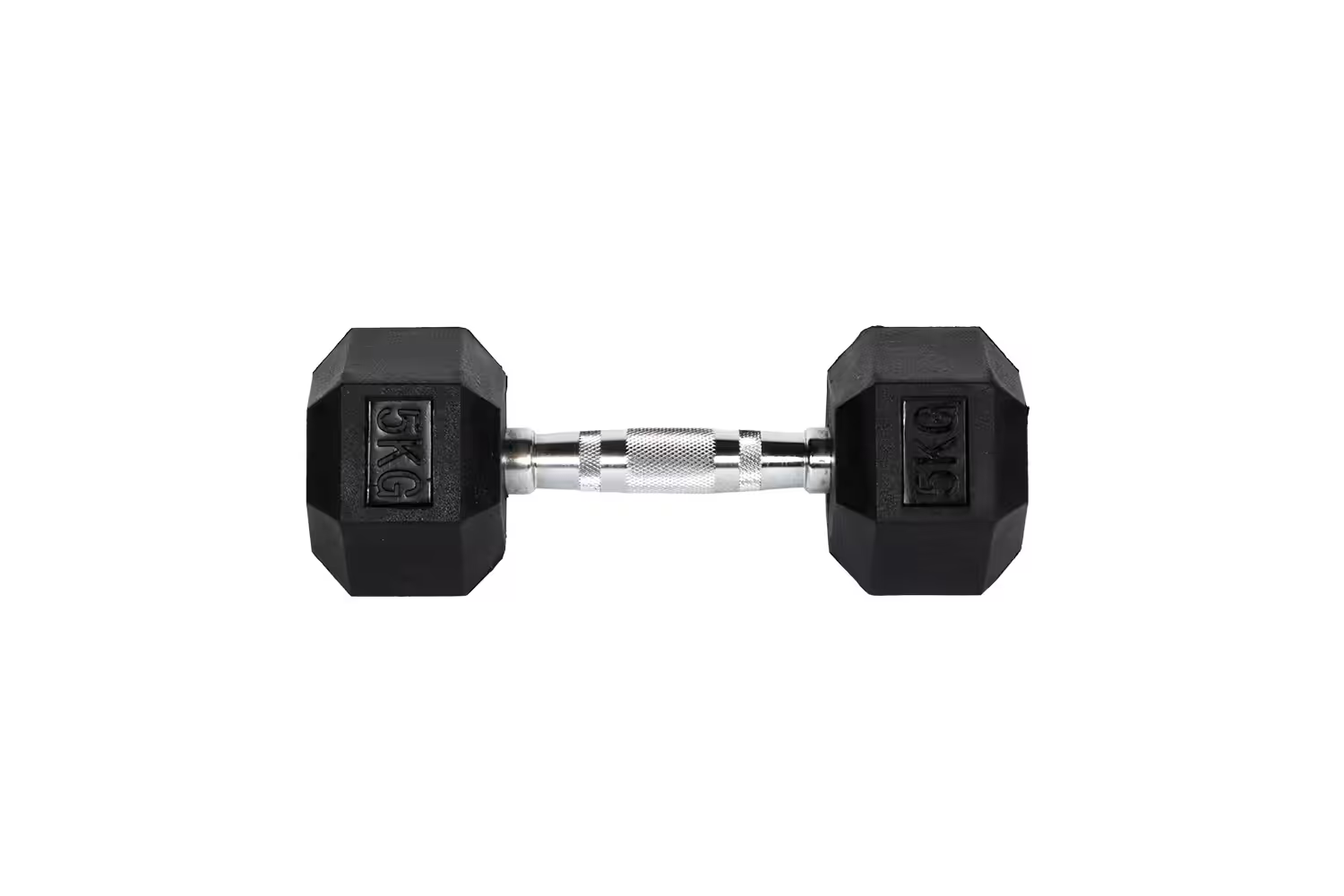
Hex Dumbbell | equal-weight pair
Example: 2 × 5 kg for CHF 30
The Hex Dumbbell comes in 32 weights from 1 to 60 kg. This two-arm version needs two dumbbells of equal weight. Select the pair option and a suitable weight in the shop. The 5 kg is a checked price example, not a recommendation for everyone. Fixed weights avoid adjustment steps, while several pairs need more storage.
Choose your pair and weight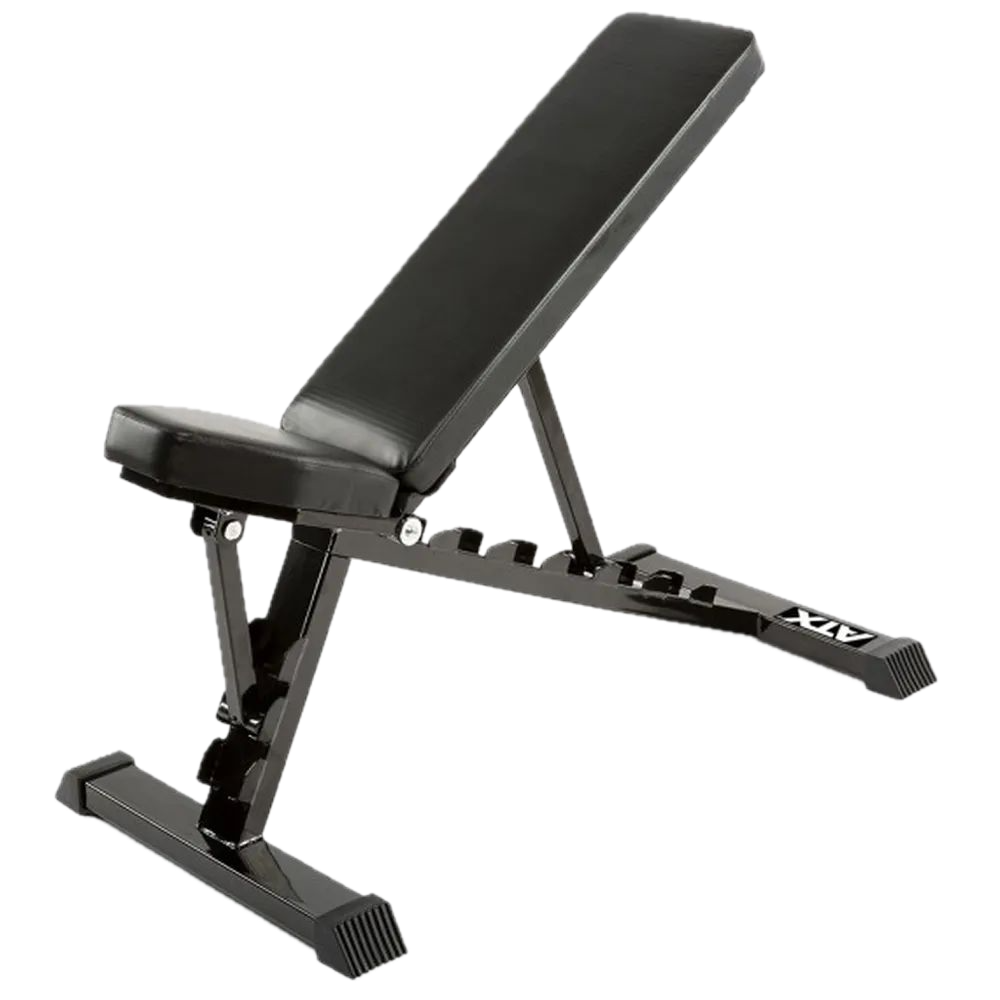
ATX Multibank 102 | for the seated version
CHF 195.–
The backrest has six positions from 0 to 89 degrees and the seat has three. The bench weighs around 21 kg and has a stated 250 kg capacity. Check what that limit includes in the manufacturer guidance; it does not mean you can add 250 kg of dumbbells. For shoulder presses, check a suitable steep setting, stable footing and foot contact with the floor.
Check the bench and adjustmentsThe example 2 × 5 kg pair plus this bench costs CHF 225 before any shipping. Standing avoids the bench purchase. Keep suitable dumbbells or a bench you already own. Specifications and original shop photos were checked, without claiming a hands-on test. Prices checked 29.10.2026.
Choose a bench: types and space
Frequently Asked Questions
Shoulder press: common questions
Are seated or standing shoulder presses better?
Seated with a backrest adds support. Standing needs no bench and asks you to steady your torso yourself. Choose according to your goal and control; neither is claimed to be universally better for muscle growth.
What bench angle suits shoulder presses?
Start with a steep backrest. Around 80–90 degrees from horizontal is a practical guide. Use an available setting that supports your back while your feet stay planted; no exact angle is required for everyone.
How far should I lower the dumbbells?
Return roughly to your starting position beside your shoulders within a comfortable, controlled range. Do not force maximum elbow depth or a fixed angle. Keep your torso steady and your wrists broadly over your elbows.
How heavy should the dumbbells be?
Light enough to control pickup, pressing, lowering and putting down. Two sets of 8–12 repetitions are an adaptable learning example. The price example of 5 kg per hand is not a universal training target.
Do I need two dumbbells or is one enough?
The simultaneous two-arm version shown needs two dumbbells of equal weight. Single-arm pressing is a different variation with different stability demands. Distinguish a single dumbbell from a pair in the shop.
What if I feel pain or arch my back a lot?
Stop the set if you feel pain. If you compensate heavily, reduce load or range and check your setup and grip. A backrest does not guarantee freedom from discomfort. Have recurring or unexplained pain assessed by a qualified professional.
Sources and practical interpretation
ExRx describes the basic path from shoulder height to overhead. The ACE exercise guide adds back support, firm foot placement and controlled lowering; ACE’s 2026 article discusses seated and standing variations. Bench angle, troubleshooting, equipment choices and learning volume are our practical additions.
Start with equipment that suits you
A suitable pair lets you start standing. If you want backrest support, add an appropriate adjustable bench. Compare weight, space and your other exercises; we can help you choose.