


Fitness Flohmarkt · Guide
Dumbbell Romanian deadlift: hip hinge and weight path
The dumbbell Romanian deadlift starts from standing. Move your hips back and lower the weights close to your legs. Reaching the floor is not the goal: controlling the hip hinge and trunk position matters. This guide covers the two-legged version with two dumbbells.
In short
Stand roughly hip-width with two equally weighted dumbbells in front of your thighs and a slight knee bend. Push your hips back as the weights stay close. Reverse before losing back position or balance. Extend through your hips and finish upright without leaning back.
1. Pick up the dumbbells and find your setup
Use a level, clear area with suitable floor protection. Pick up the dumbbells under control; getting into standing is part of the setup. Start with a light load you can hold without momentum. Stand roughly hip-width with even foot contact and weights in front of your thighs. Keep your arms long.
Soften your knees and brace your trunk. Keep your head aligned with your torso rather than looking up into a mirror throughout the descent. Hold both weights evenly and avoid letting one drift forwards or sideways.
2. Move your hips back and keep the weights close
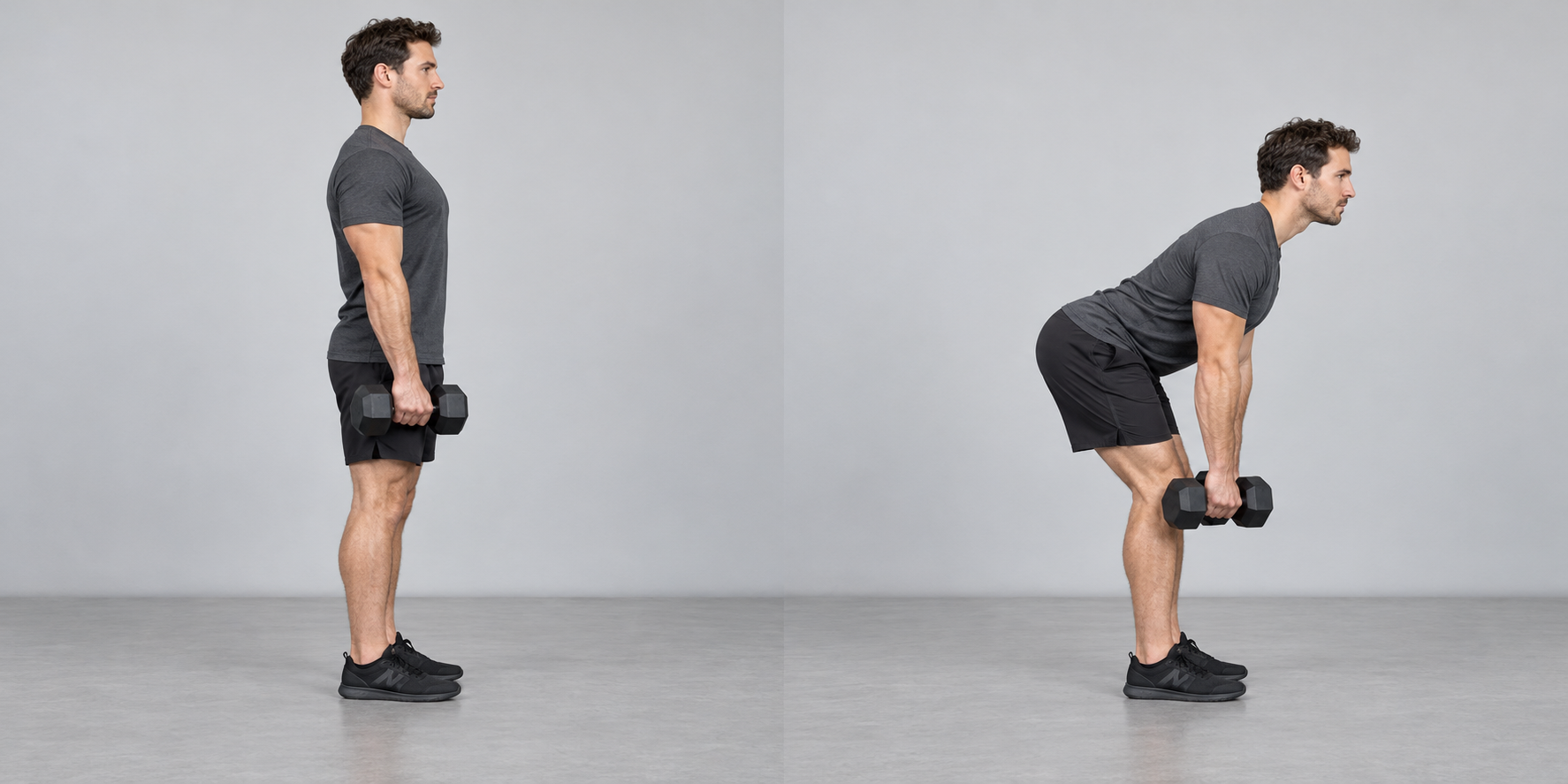
Start the descent at your hips: move your buttocks backwards as your torso tips forwards. Keep a slight knee bend with little change in knee angle. Avoid sitting down into a squat. Practising without weights first helps distinguish the hinge from a squat.
Guide the dumbbells close to the front of your thighs and along your legs. Let them hang beneath your shoulders rather than reaching them forwards. Your hands hold the load; your arms do not curl it. Keep both weights at a similar height and your whole foot loaded.
3. Find your range and return to standing
Lower only while you can move your hips back and maintain your trunk position. Increasing tension at the back of your legs is a cue rather than a reason to seek the strongest stretch. Reverse before gaining extra depth by markedly rounding your lower back, bending your knees much further or moving the weights away.
Push through the floor and bring your hips forwards until you stand upright. Keep the dumbbells close. Finish without extra backward lean or shrugging. After the last repetition, put both weights down under control; a rubber coating does not approve dropping.
Correct these RDL mistakes first
It becomes a squat: keep soft knees but move your hips further back rather than sitting lower.
The weights swing forwards: reduce load and keep them closer to your legs without yanking them back with your arms.
You insist on reaching the floor: shorten the range when back position or balance deteriorates. Deeper is not automatically better.
Practise light first and increase only when you can repeat the same sequence. One weight recommendation does not fit everyone. If your grip gives out first, finish the set and adjust the load. Stop for pain; in-person technique coaching helps when unsure.
Which dumbbells suit an RDL?
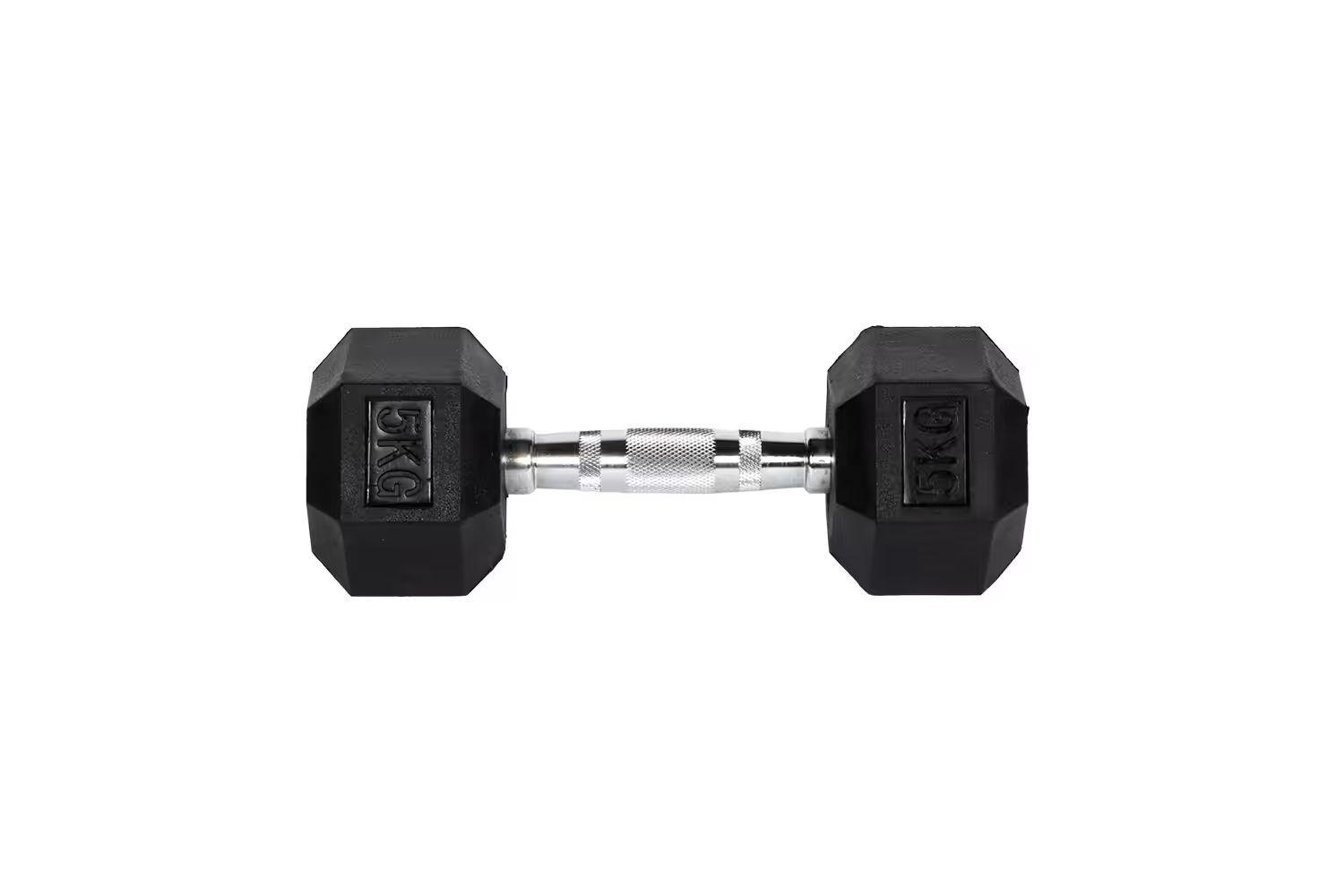
Hex Dumbbells: choose two matching weights
From CHF 3.– each
The shop offers individual weights from 1 to 60 kg. This RDL version needs two matching dumbbells: the individual price is not a pair price. Choose a suitable weight and quantity 2. Rubber-coated hex heads help with placing them down; still check space and flooring.
Choose two suitable hex dumbbellsOriginal shop photo and verified specifications, without a hands-on product test. Price checked 28.10.2026. The starting price is for the lightest individual option rather than a training-weight recommendation.
RDL, full-body plan and deadlifts from the floor
This dumbbell RDL is a single exercise starting from standing. A conventional barbell deadlift starts each repetition from the floor with more knee involvement. A trap bar changes grip and load position; it does not automatically turn a floor start into an RDL. Use the separate dumbbell guide for exercise order, other movements and the full-body plan.
See the dumbbell full-body plan · Learn conventional deadlifts · Compare trap bars and straight barbells
Frequently Asked Questions
Dumbbell Romanian deadlift: common questions
What does a dumbbell Romanian deadlift train?
Glutes and the back of the thighs work mainly through hip extension. Your trunk stabilizes and your hands hold the weights. It is not an isolated back exercise; the controlled hip hinge is the focus.
How far should I lower the dumbbells in an RDL?
Only while your hinge, foot contact and trunk position remain controlled. The floor is not a required target. Reverse earlier if extra depth requires marked back rounding or much more knee bend.
Should my legs stay straight in a Romanian deadlift?
Keep a slight knee bend with little angle change during the hinge. Do not deliberately lock your knees straight or turn the descent into a deep squat.
How much weight should I use for dumbbell RDLs?
There is no universal number. Start with weights you can guide calmly and close on both sides. Hinge, grip and trunk control determine when to increase. Matching dumbbells help create a symmetrical setup.
Do the dumbbells need to touch my legs?
Keep them close to your legs without needing constant contact. Avoid holding the load out in front on reaching arms. Do not let the dumbbells swing or drift on one side.
Is the hex-dumbbell price for a pair?
The linked Hex Dumbbells are priced individually. For this two-dumbbell RDL choose two matching weights. The total depends on the selected option and quantity.
Hip-hinge and RDL sources
The movement pattern was checked against ACE’s RDL descriptions: standing start, slight knee bend and a close weight path. The sources explain the pattern with a barbell; here we apply it to two dumbbells. These guidelines do not replace individual technique assessment.
Two dumbbells, one controlled hip hinge
Want to practise RDLs at home? Choose two matching hex dumbbells that suit you. If unsure about weight or space, clarify these product questions with us before ordering. Our dumbbell full-body programme places the exercise in a complete training plan.