


Fitness Flohmarkt · Guide
Lat pulldown and rowing handles: which grip fits each movement?
Wide pulldown bars, narrow parallel handles and rotating attachments look different. What matters is how you can pull with them. Compare hand position, movement clearance and four actual shop handles, so you buy the attachment you will use rather than a set that stays half unused on the wall.
Seated cable row: check your seat and pulling technique step by step
Lat pulldown technique: check seat, grip and movement step by step
In short
For compact rows with your palms facing each other, the CHF 15.– rubber-coated parallel handle is a simple choice. For two-handed pulldowns with a choice of hand spacing, consider the 120 cm pulldown bar at CHF 29.–. The CHF 45.– Rotation Row Handle adds a rotating attachment; the CHF 9.– single handle allows one-sided pulls. Choose by movement, space and comfortable hand position. A wider bar is not automatically a better choice.
Overhand, underhand or neutral: hand position before width
With an overhand grip, your palms generally face away from you in the usual starting position; with an underhand grip, they face you. With a neutral or parallel grip, they face each other. A bar fixes hand spacing once you take hold. Two separate single handles offer more freedom to guide each arm independently, provided your station has two suitable cable points.
Choose a grip that lets your wrists and elbows follow the intended movement. With a light load, check that you can cover your intended range without compensating. If very wide hand spacing shortens your pull or forces an uncomfortable position, move your hands closer or choose another shape. An attachment is not a treatment for pain; stop if symptoms occur and address their cause.
Pulldowns and rows: similar attachments, different requirements
For a pulldown, the cable comes from above. Check that the bar has room in front of your body and that your chosen grip allows a controlled movement. A wide bar offers several hand spacings but needs clearance. You do not have to hold the outermost ends simply because the attachment is 120 cm wide.
For rows, the pull comes more from in front. What matters is how close the handle can come to your torso before the frame, eyelet or carabiner gets in the way. A narrow parallel handle is compact. A wider attachment changes hand spacing and arm path but also needs room. Compare depth, height and frame shape as well as width: all affect the available endpoint.
Looking for an attachment for triceps pressdowns or barbell rows? Our triceps guide compares ropes and short bars; the T-bar row guide covers slide-on 50 mm handles.
Four cable handles compared

Parallel grip cable pulley | Rubberized rowing grip
- CHF 15.–
- 18 cm wide · Grip Ø 31 mm
For compact rows with fixed hand spacing. Rubber-coated grips distinguish it from the metal version; try which feel you prefer if possible. It costs CHF 15.– and needs little side clearance. Its listed 18 cm overall width is not necessarily the distance between the centres of your hands.
View this handle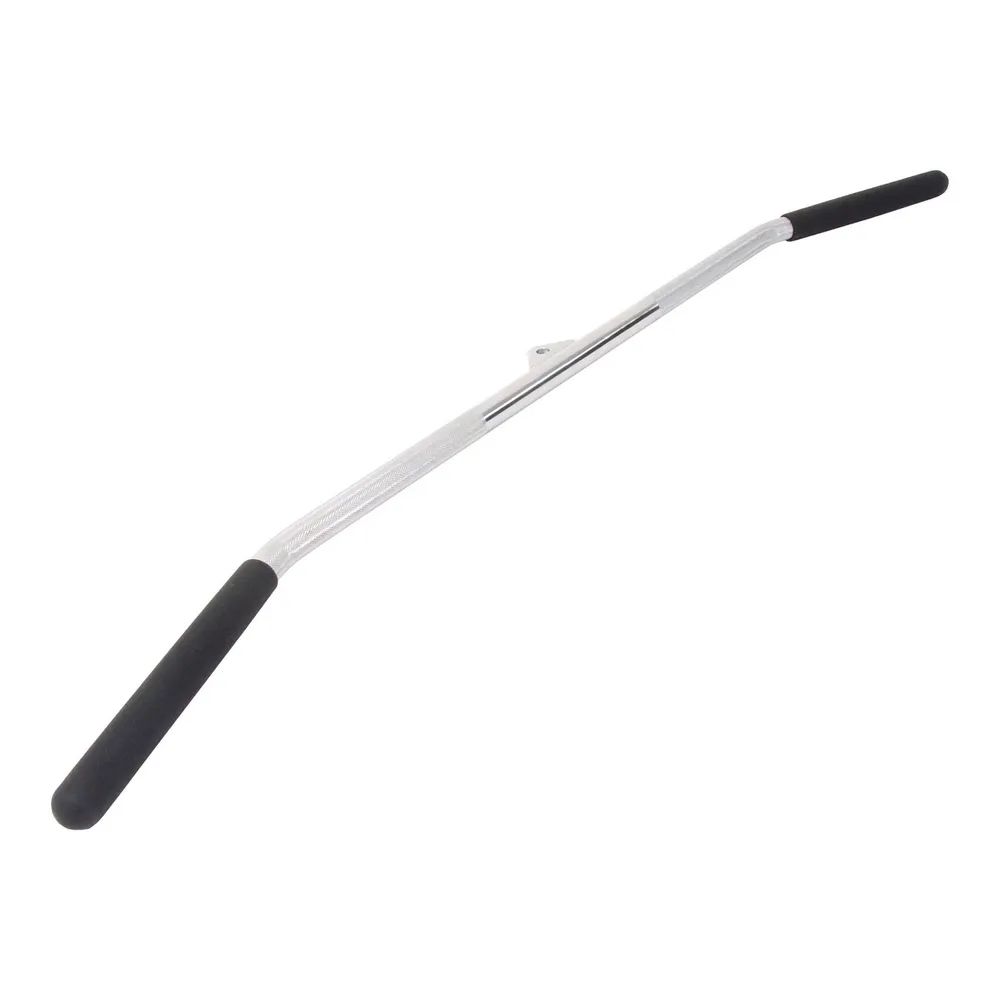
Lat pulldown handle wide | Lat pulldown bar
- CHF 29.–
- 120 cm wide · Grip Ø 30 mm
For two-handed pulldowns with a choice of hand spacing, if the station offers enough room. The steel bar with plastic grip areas costs CHF 29.– and weighs 4.9 kg according to the shop. Account for this weight when changing from a light attachment. Its width makes it less practical in narrow cable towers.
View this handle
Rotation Row Handle | Parallel Handle Cable Pull
- CHF 45.–
- 18 cm wide · Grip Ø 28 mm
An alternative to a basic narrow handle if its shape and moving attachment suit you better. The shop lists a double-bearing pivot and a ring eyelet that rotates through 360°. This does not mean both hands rotate independently. At CHF 45.–, it costs CHF 30.– more than the rubber-coated parallel handle; choose it if you actually want that construction.
View this handle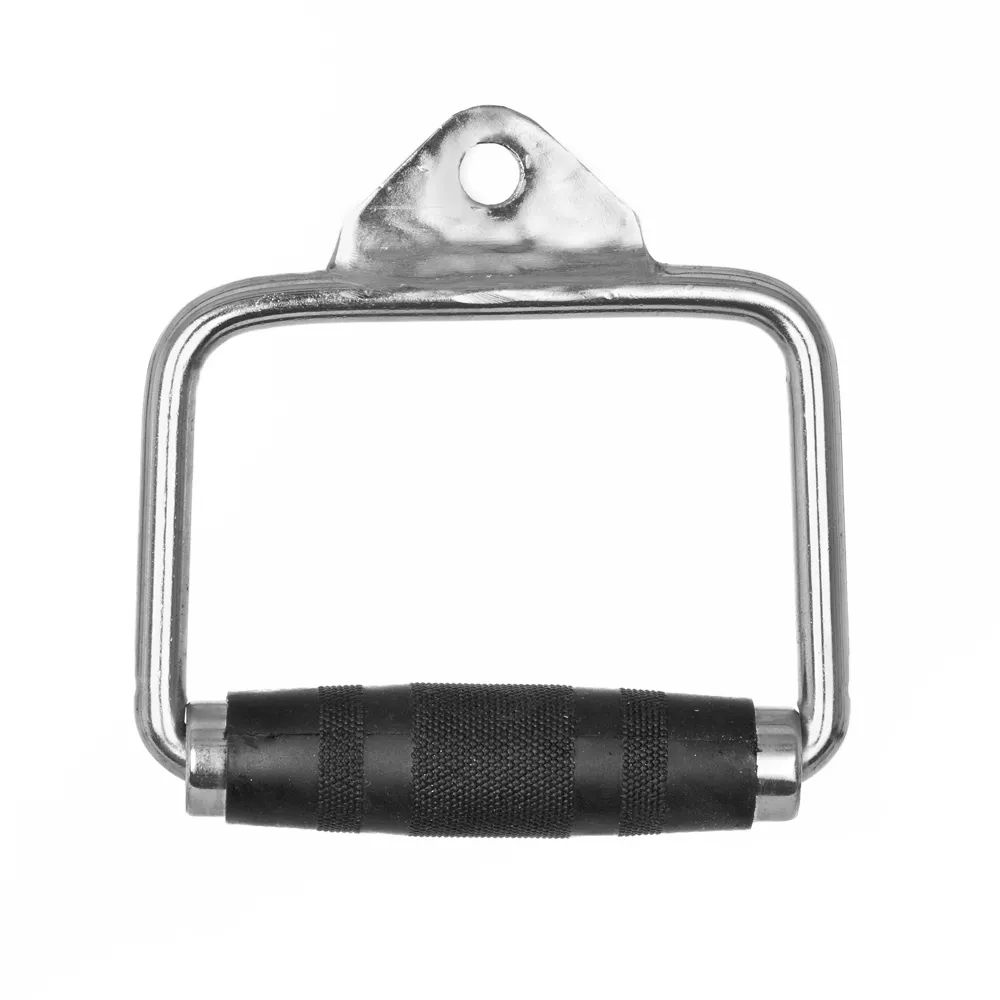
One-hand grip Cable Cross rubberized | cable pull
- CHF 9.–
- 14 cm wide · Grip Ø 31 mm
For single-arm rows and other one-sided cable pulls. One handle is enough if you train the sides in turn. On a suitable station with two independent cable points, you need two: CHF 18.– rather than CHF 9.–. Two handles on one cable do not create two independent cable pulls.
View this handleEach of the four offers includes one cable handle. Check the station, cable and any additional connecting parts separately. Prices as of 28.10.2026, including VAT and excluding delivery. Original photos and product data come from our shop; this is editorial selection guidance, not our own product test.
Does the handle fit your cable station and its movement path?
Check the eyelet, connection and carabiner together: the gate must close fully without binding on the handle. Load ratings apply throughout the connection chain; a shape that fits is not proof of load capacity. Clarify missing ratings before training. A similarly named T-bar handle may have a 50 mm slide-on fitting rather than a cable eyelet, so it will not connect directly to the cable.
Test the path with a light load. The handle must clear rack uprights and pulleys, and your hands and fingers need space too. Added carabiner and eyelet length can change the available travel, especially with limited ceiling height. Handle weight and geometry change the feel when swapping attachments. The number on a weight stack does not represent the same resistance at your hands on every station.
Which small handle setup should you buy first?
Buy the handle for the movement you are actually missing first. For rows plus two-handed pulldowns, the rubber-coated parallel handle and wide bar cost CHF 44.– together. Adding one single handle brings the total to CHF 53.–. This is an option, not a required set: if a suitable handle is already included, buy only the missing addition.
Choose the Rotation Row Handle for its construction, not because “Premium” guarantees better training results. Try the grip feel if possible. If unsure, send us your station, connection and intended exercise; those details are more useful than attachment width alone.
Frequently Asked Questions
Pulldown handles: key questions answered
Which handle is best for lat pulldowns?
The handle that lets you perform the intended pull under control with comfortable hand positioning. A wide bar offers different hand spacings; a parallel handle sets a different hand orientation. Wider is not automatically better.
What is a neutral grip?
With a neutral or parallel grip, your palms face each other. Overall attachment width is not necessarily hand spacing. The shape and position of the actual grip areas matter.
Can I use the same handle for pulldowns and rows?
Often yes, if the connection, movement path and hand position work. Test both with a light load. A long bar may hit your body or station during rows, while a compact handle allows more room.
Does a rotating handle let both hands turn freely?
Not automatically. For the Rotation Row Handle shown, the shop lists a rotating eyelet and a bearing-mounted pivot. That is different from two independently rotating grips. Check the actual construction rather than the name alone.
Do I need one or two single handles?
One CHF 9.– handle is enough to train each side in turn. For two independent cable points on a suitable station, you need two for CHF 18.–. Two handles on a single cable do not create two independent resistances.
Do cable handles and T-bar handles use the same fitting?
Not necessarily. Cable handles generally connect through an eyelet; slide-on T-bar handles may fit a 50 mm bar sleeve. Check the intended connection and load rating before buying.
Choose the handle for your movement
You do not need a wall full of attachments. Start with the handle that fits your movement and station. The category has further options; if fit is unclear, send a photo of the connection and your intended exercise.