


Fitness Flohmarkt · Guide
Lat pulldown technique: grip, seat and range of motion
Want to perform the lat pulldown correctly? Start with a stable seat, a controlled pull in front of your body and a load you can move without momentum. Work through the technique and check whether your handle and cable setup fit the movement.
Seated cable row: check your seat and pulling technique step by step
In short
Sit securely, anchor your thighs and drive your elbows down. The bar travels in front of your face towards your upper chest. Keep your torso steady and control the return. Chest contact is optional. Reduce the load if you have to jerk backwards.
1. Set the seat and thigh pad
Check machine stability, the handle connection and the weight-stack pin. Set the thigh pad to keep you seated during the pull. Plant your feet firmly on the floor. Set the seat so your arms can extend overhead without the stack hitting its stops uncontrollably. Make adjustments without load as instructed.
A high pulley alone does not make a complete pulldown station. At home you also need a suitable seated or kneeling position, secure support and enough cable travel. A light stool without anchoring does not replace a stable station under heavy pulling loads. Our separate guide covers equipment selection and retrofitting.
Add a cable setup at home2. Technique: pull in front without momentum
Starting position and pull
Take an even overhand grip. Slightly wider than shoulder width is a useful starting point; adjust for comfortable wrists and shoulders. Brace your trunk and lean back slightly. Drive your elbows down towards your sides as the bar travels in front towards your upper chest. Keep the same torso angle.
End point and return
Stop before you have to pull your elbows far behind your body or push your head forwards. Do not force chest contact. Guide the bar upwards under control until your arms are extended again. Let your shoulder blades move during the return and rise slightly at the top. Do not drop the load or let it jerk you out of the seat.
3. Choose load by control
Start with a light practice set. You should be able to repeat the movement with the same seat position and controlled return. If it turns into leaning back and yanking, the load is too high for that execution. Increase only when the movement stays repeatable. Record the machine, handle, seat setting and load together.
There is no useful universal kilogram target: pulley ratio, friction and machine design change resistance at the handle. Do not directly compare a gym weight stack with a rack attachment or digital cable. Stop for pain and seek assessment of persistent symptoms.
Spot common pulldown mistakes
You lift off the seat: check the thigh pad, seat position and load before continuing.
You pull behind your neck: bring the bar in front of your body and keep your head aligned with your trunk.
The pulldown turns into a row: reduce the load and keep a small, constant backward lean.
You mainly feel your arms: guide the elbows down, reduce load and review the movement. Elbow flexors assist in pulldowns; feeling them does not by itself prove a technique error.
Which handle fits your pulldown technique?
A wide bar is one option for two-arm pulldowns. Do not automatically grip the ends: overall bar width does not prescribe hand spacing. A suitable parallel handle offers a different hand position. Prioritise a controllable movement and enough machine clearance. For a full comparison of width, hand position and rotation:
Compare lat pulldown and rowing handles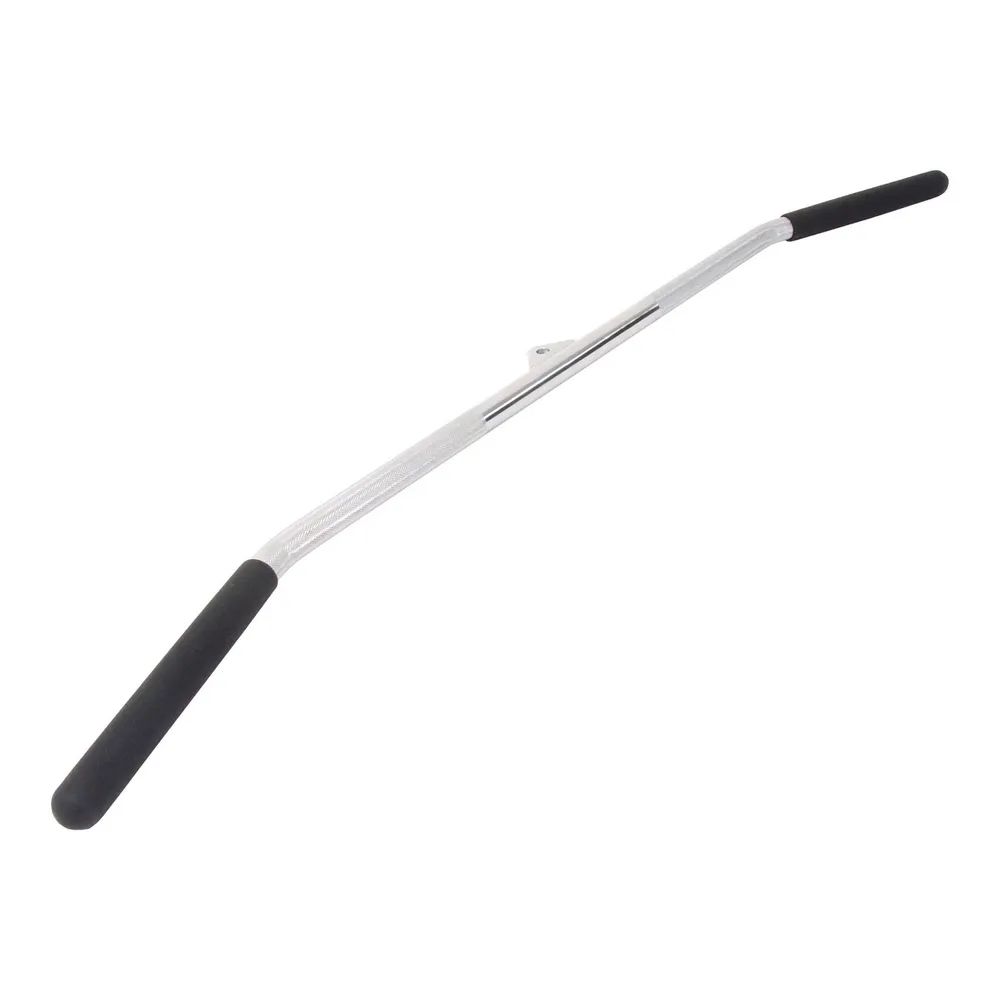
Lat pulldown handle wide | Lat pulldown bar
CHF 29.–
120 cm overall width, plastic-coated steel and a rotating attachment point. An option if you need a long bar for an existing cable setup. Check attachment, carabiner fit and side clearance before ordering. We do not state a load limit without a confirmed product specification.
View the lat pulldown barShop photograph and specifications, without a hands-on product test. Price checked 28.10.2026. The bar does not replace secure seat anchoring or checking the complete cable structure.
Frequently Asked Questions
Lat pulldown technique: common questions
How far should I pull the bar down?
Towards the upper chest while keeping your torso and head steady. Stop before your elbows move far behind your body. Chest contact is optional and should not be forced with momentum.
How wide should my pulldown grip be?
Slightly wider than shoulder width is an overhand starting point. Adjust spacing for a comfortable movement. A 120 cm bar does not have to be gripped at its outermost ends.
Should I pull behind my neck?
For the standard pulldown described here, bring the bar in front towards your upper chest. Keep your head aligned with your trunk instead of pushing it forwards to clear the bar.
How much weight should I use?
Choose a load allowing several controlled repetitions without yanking or lifting off the seat. There is no universal kilogram target. Pulley ratio and machine design change resistance at the handle.
Can my shoulder blades move at the top?
Yes. Control the return until your arms are extended; your shoulder blades can move and rise slightly at the top. Do not hold them rigidly down throughout the return.
Is this the same as a straight-arm pulldown?
No. In a lat pulldown you bend your elbows and the elbow flexors assist. In a straight-arm pulldown the elbow angle stays nearly constant. It is a different exercise with its own load and technique.
Technique sources
The basic movement was checked against ACE’s exercise guide. NSCA identifies the upper chest as the pull target; Catalyst Athletics also explains the single-arm variation and pulling muscles involved. Check machine settings and load limits in your model’s instructions.
Your handle should fit the movement
Need a bar for your existing setup? View the actual product or ask us about the connection first. With your machine model and a photo of the attachment point, we can check the connection before you order.