


Fitness Flohmarkt · Guide
Dumbbell lateral raises: weight, angle and common mistakes
Even light dumbbells can feel demanding near the top of a lateral raise. Lift your arms out and slightly forward, keep a soft bend in your elbows and lower the weights under control. Find a load and arm path you can repeat throughout the set.
In short
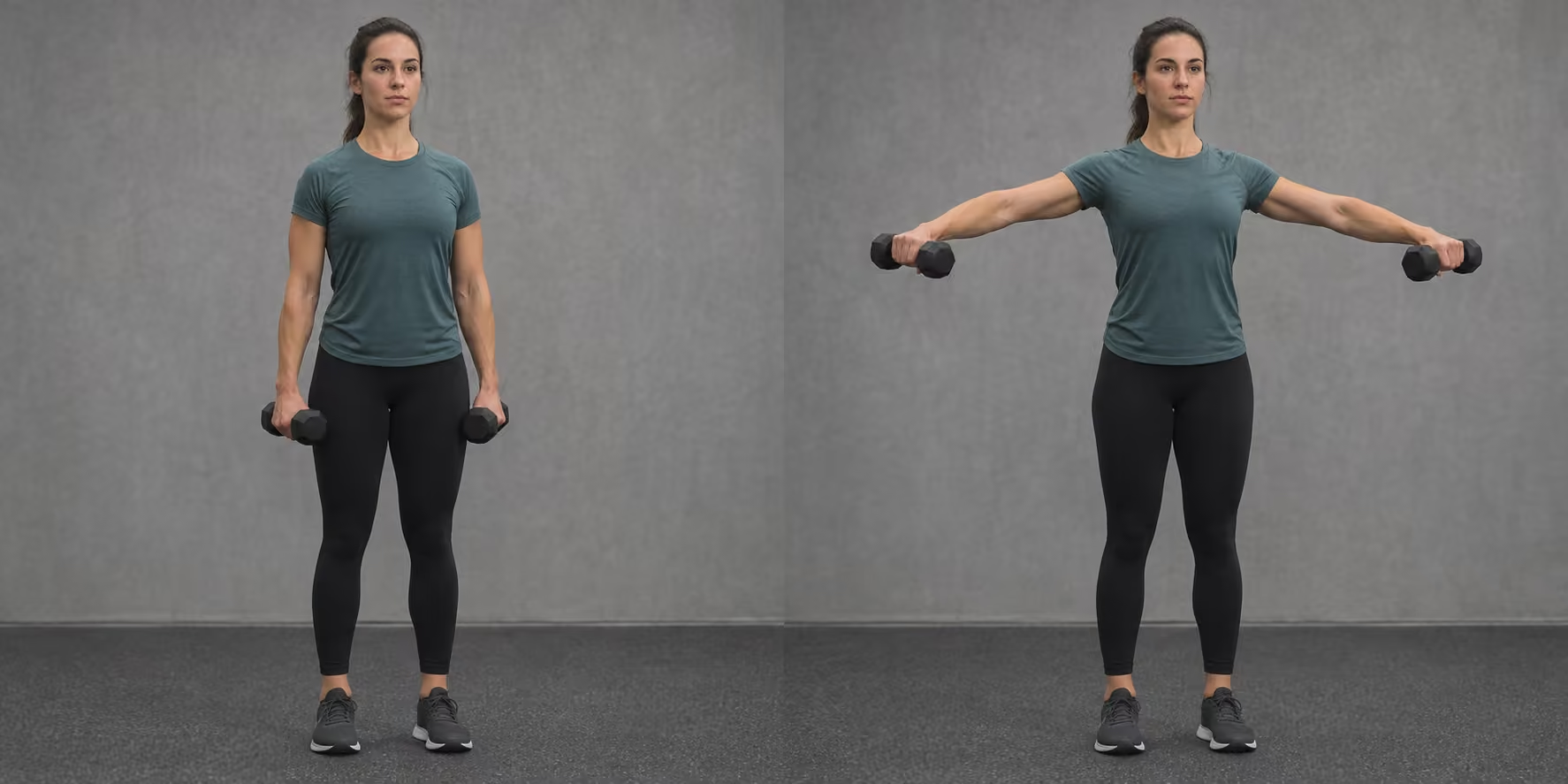
Start with the dumbbells beside your thighs. Guide your elbows out and slightly forward in a smooth arc. Shoulder height is a reference point. Lower slowly enough to begin the next rep without momentum.
How to do dumbbell lateral raises
- Stand about hip-width apart with soft knees and a steady torso. Grip both dumbbells firmly. Your palms face your thighs and your elbows stay slightly bent.
- Raise your upper arms out in an arc slightly in front of your torso. Let the hands follow the elbows. Keep your wrists straight and your grip neutral or your thumbs slightly up.
- Lift to around shoulder height or a little lower if that gives you better control. Let your shoulder blades move. Keep your neck relaxed and the bend in your elbows fairly constant.
- Lower the dumbbells along the same path. Take about two seconds to come down and start each rep from the same steady position.
What weight suits lateral raises?
Start with a light set of 12–15 reps. Adjust the weight so the last reps feel challenging while you can still reach the same height and lower smoothly. If you start driving with your knees or dropping the dumbbells quickly, end the set and try a lighter pair next time.
Leverage increases as the dumbbells move farther sideways from the shoulder. The same weight generally feels heavier near the top than at the start. With a cable, the pull direction, pulley position and where you stand affect how resistance feels through the movement.
Three common lateral raise mistakes
| What you notice | What to adjust |
|---|---|
| You drive with your hips or knees. | Use less weight and let the dumbbells settle briefly at the bottom. |
| Your shoulders shrug early. | Lift a little lower or lighter. Guide your elbows out and let your shoulder blades move naturally. |
| Your hands rise well above your elbows. | Lead with your upper arms and keep the soft elbow bend. At the top, your hands and elbows are roughly level. |
Light dumbbells for lateral raises
Use two matching dumbbells for bilateral raises. Fixed dumbbells are ready to use. For adjustable models, check the minimum weight and increments. Going from 2 to 3 kg adds 50% per hand.
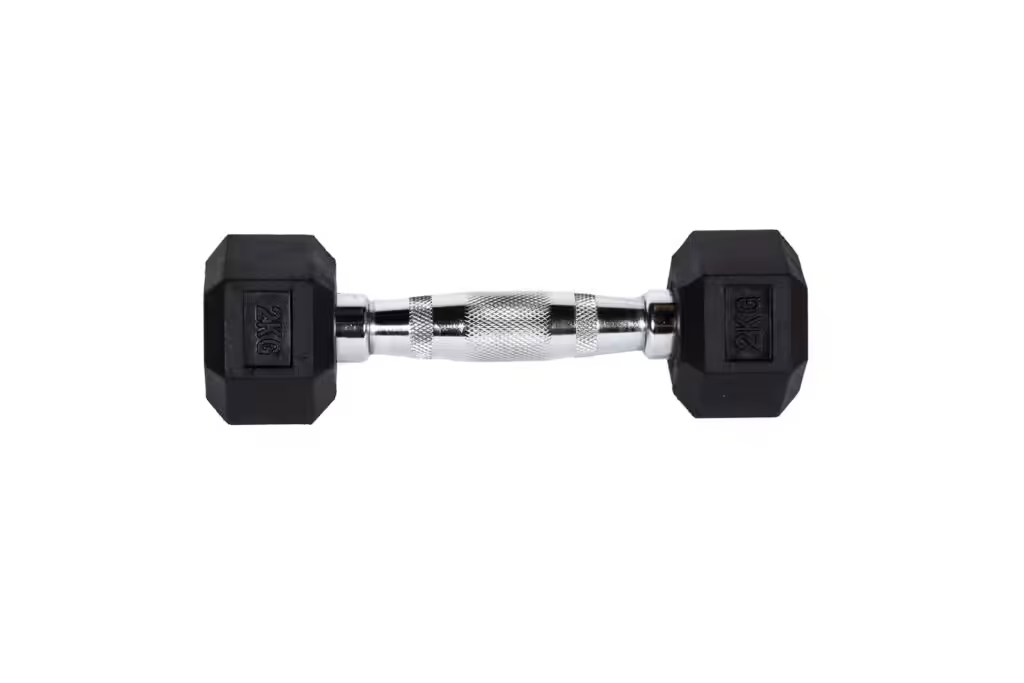
Hex Dumbbell
Example 2 × 2 kg for CHF 12
Fixed dumbbell with rubber-coated hexagonal heads. Select a pair and the weight per hand in the shop. The example is for 2 kg per hand as of 9 November 2026. Check the current price when choosing.
Choose your pair and weightFrequently Asked Questions
Questions about dumbbell lateral raises
Which muscles do dumbbell lateral raises train?
The lateral part of the deltoid does most of the work. Other muscles around the shoulder and shoulder blade help lift and guide the arm.
How high should I lift the dumbbells?
Aim for about shoulder height with your elbows. A slightly lower top position is fine if it lets you control the movement better.
How much should I bend my elbows?
A soft bend is enough. Keep it fairly constant. Bending more shortens the lever and changes how heavy the same dumbbell feels.
Can I start with one dumbbell?
Yes. Train one side at a time and keep your torso steady. Use light support with your free hand if helpful.
Is 2 kg enough for lateral raises?
It depends on your control. Choose a weight that lets you repeat the same top position and controlled descent even at the end of the set.
How does the cable variation differ?
Gravity pulls dumbbells down. A cable pulls towards the pulley. That changes which part of the arm path feels hardest.
Technique reference
Find your dumbbell pair for lateral raises
Start with a light weight you can control on the way up and down. Choose the weight per hand in the shop.
Choose a suitable dumbbell pair