


Fitness Flohmarkt · Guide
Single-arm dumbbell row: bench position and pulling path
One dumbbell, a stable bench and a controlled pull: single-arm dumbbell rows need little equipment. What matters is supporting yourself well and moving the dumbbell rather than twisting your torso on every rep. Here are the setup, pulling path and useful buying criteria for home.
In short
Support your left hand and left knee on the bench, place your right foot on the floor and hold the dumbbell in your right hand. Keep your torso steady and close to horizontal. Pull towards your lower ribs with your elbow near your body, then lower under control. Switch sides afterwards.
Single-arm dumbbell row: your bench position
Place the bench on a level, firm floor. It must not wobble or tip under your sideways hand and knee support. Check its feet, pad and manufacturer guidance. A suitable flat bench you already own is enough; an adjustable backrest adds no necessary benefit for this variation.
For your right arm, support your left knee and left hand on the bench. Keep your right foot on the floor, slightly out to the side and back. Adjust your hand and knee along the bench until your torso is comfortably close to horizontal and the dumbbell clears the pad. Keep your head and neck aligned with your torso.
No single bench height or foot-to-bench distance suits everyone. Test the setup with a light dumbbell first. The support helps steady your torso, but it does not remove all stabilising work from your lower back.
The pulling path: lower ribs without shrugging
Your latissimus dorsi and muscles around the shoulder blade work together, with elbow flexors helping the pull. This is more than a biceps exercise, and you should not keep your shoulder blades tightly pinned together throughout the set.
- Let your right arm hang below your shoulder, using a neutral grip with your palm facing the bench. Extend your elbow without forcing it into a lock.
- Drive your elbow back and bring the dumbbell towards your lower ribs. Let your shoulder blade move back naturally, without deliberately shrugging towards your ear.
- Finish roughly when your upper arm reaches your torso line. You do not need to press the dumbbell into your stomach or force your elbow as far behind you as possible. Keep your rib cage and pelvis facing broadly the same way.
- Lower calmly and let your shoulder blade move forward again. Return to the long-arm position without dropping the weight or rotating your torso. Reverse the setup for the other side.
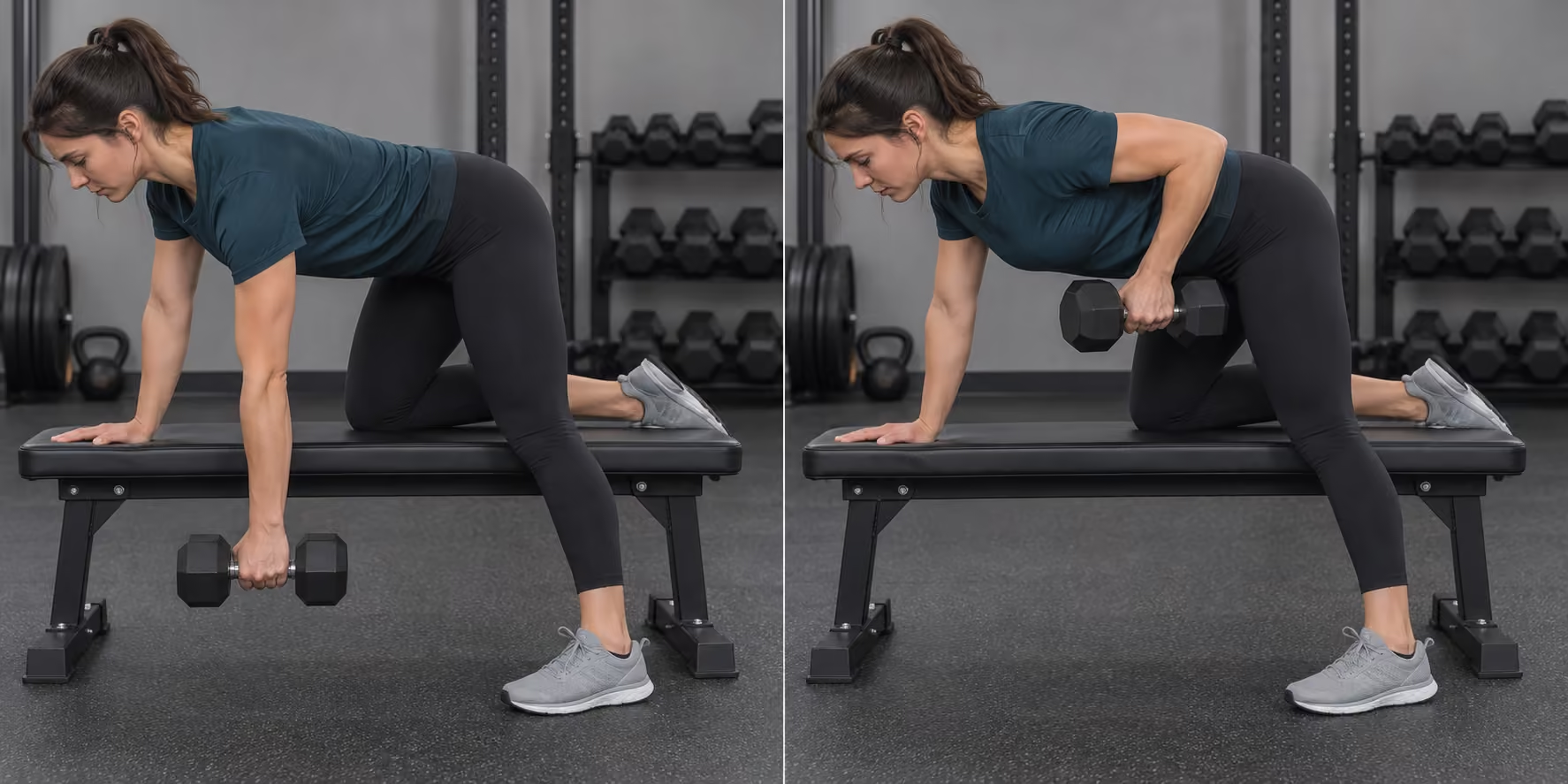
Four common single-arm row mistakes
| What you notice | What to check |
|---|---|
| Your torso twists on each pull | Reduce the load. Keep your hand, knee and foot steady and move your arm rather than throwing the dumbbell up with a torso twist. |
| The dumbbell travels towards your shoulder | Move your elbow back close to your torso. Aim towards your lower ribs rather than shrugging. |
| Your shoulder blade stays pinned back | Allow a controlled forward movement as you lower. Do not gain reach by twisting or collapsing your torso. |
| The bench or your foot slides | Stop the set and correct the floor surface and support. A high load rating does not replace a stable setup. |
Choose your weight and repetitions
Start with a weight that allows the same controlled path on both sides. As an adaptable learning example, try two sets of 8–12 reps per side. Start with the less confident side and use the number of reps you can repeat well. Increase by a small step once your setup and return stay steady.
A universal kilogram recommendation would be misleading. A light weight is useful while learning. Stop if you feel pain; extra momentum or a forced end position is not a solution. Rest enough to begin the next set under control.
One dumbbell and a stable bench are enough
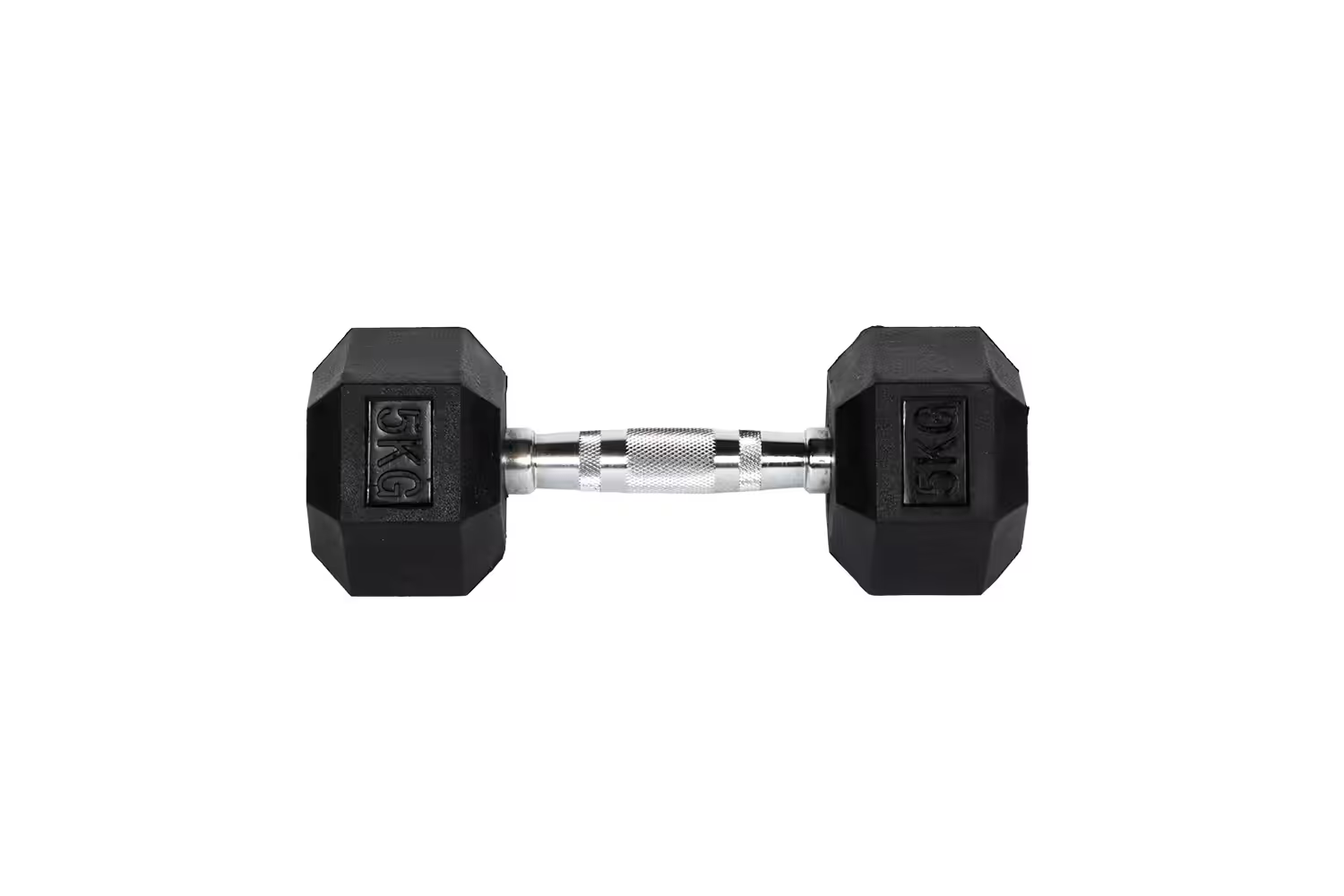
Hex Dumbbell | choose a single weight
From CHF 3.– each
The shop offers 32 weights from 1 to 60 kg. The starting price is for 1 kg, not every rowing weight. One dumbbell is enough because you train each side in turn. Select the single-dumbbell option and your suitable weight. Rubber hex heads roll less easily on a flat floor, but that is not permission to drop them.
Choose your weight and unit price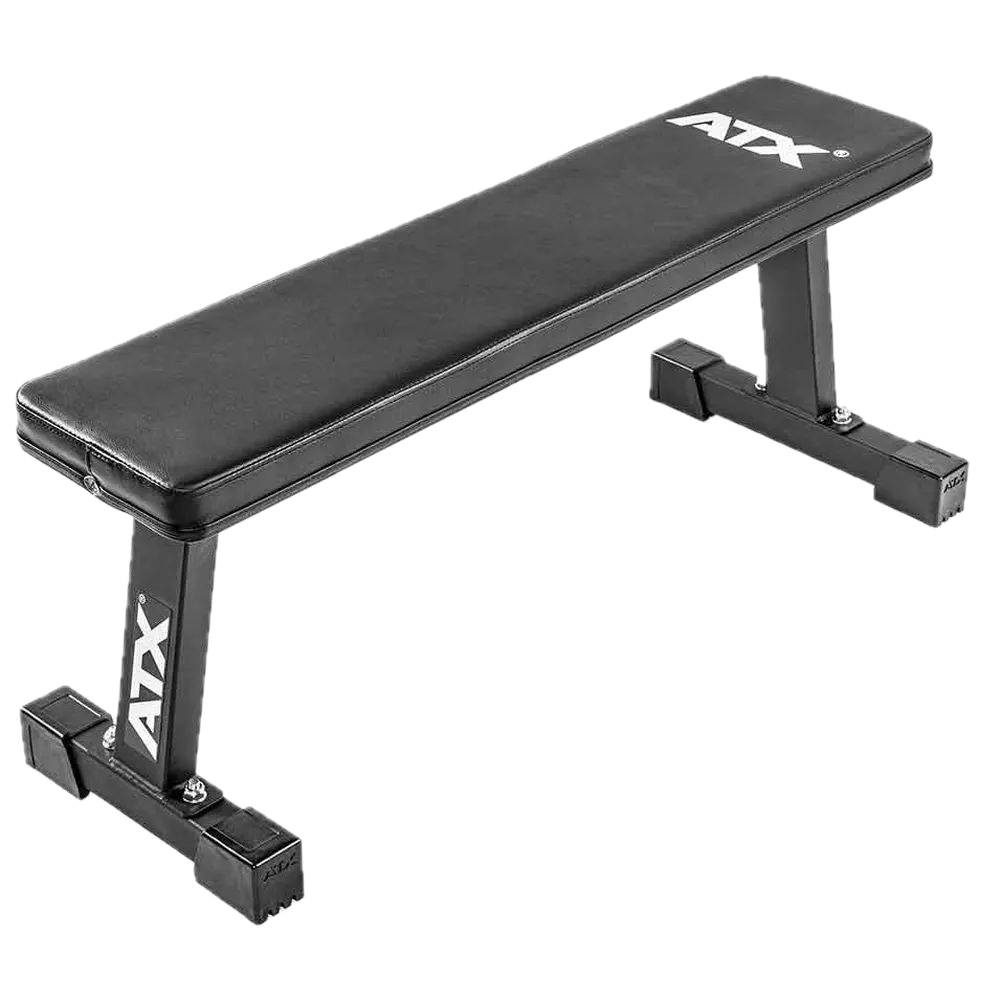
ATX Flat Bench Compact
CHF 175.–
A compact flat bench with a steel frame, rubber feet and 5 cm padding. For supported rows, check its usable pad area and stability under your sideways support. The stated 600 kg capacity is a manufacturer product rating, not a recommended training load. If your existing bench suits you, you do not need a second one.
View the bench and dimensionsYour cost is the bench plus the unit price of your chosen dumbbell weight, with any shipping added. Original shop photos and specifications were checked, without claiming a hands-on test. Prices checked 29.10.2026.
How does this fit your training?
A single-arm dumbbell row is a horizontal pull with a freely moving dumbbell and additional support. A cable pulls along its cable line, while a T-bar lever helps determine the path. These setups differ; you do not need every variation in the same programme.
Six-exercise full-body dumbbell programme
Frequently Asked Questions
Single-arm dumbbell row: common questions
Which hand and knee go on the bench?
When rowing with your right arm, support your left hand and left knee on the bench and your right foot on the floor. Reverse the setup for your left arm.
Where should I pull the dumbbell?
Pull towards your lower ribs with your elbow close to your torso. Finish roughly at your torso line without forcing body contact or driving your elbow as far back as possible.
Should my shoulder blade move?
Yes. It moves back during the pull and forward during the controlled return. Do not pin it back throughout the set or throw the dumbbell up with a large torso twist.
How much weight should I use for single-arm rows?
Choose a weight you can control on both sides, including the lowering phase. Start light and increase in small steps. There is no universal kilogram target; the shop’s starting price for 1 kg is not a training recommendation.
Do I need two dumbbells?
One dumbbell is enough because you train each arm in turn. The Hex Dumbbell unit price is for a single weight. Buy a pair if you also want it for other exercises.
Which bench suits dumbbell rows?
A suitable stable flat bench with room for your hand and knee is enough. Check manufacturer guidance, usable pad space and stability under sideways support. No specific height or adjustable backrest is required.
Source and practical interpretation
The basic movement is checked against ExRx Dumbbell Bent-over Row: hand and knee supported on a bench, a single-arm pull beside the torso and a moving shoulder blade. Bench checks, product choices and learning volume are our practical additions.
A suitable weight and stable support
If you need a dumbbell, choose a weight that suits your controlled technique. You can add a single Hex Dumbbell. If you also need a bench, compare your available space and other exercises first. We can help you choose a suitable setup.