


Fitness Flohmarkt · Guide
Cable flys: train your chest with control
Cable flys bring your arms together in an arc in front of your chest. Unlike a press, the bend in your elbows stays fairly constant. Suitable handle height, a stable stance and a manageable load help you learn the movement without turning each repetition into a chest press. Here is a two-cable setup and an option for a single outlet.
In short
Set both pulleys to the same height, a little above your shoulders. Holding one handle in each hand, take a small controlled step forward into a stable split stance. Bring your slightly bent arms together in front of your chest, then return slowly. Open only as far as you can control; there is no need to move behind your body or cross your hands in front.
Set up cable flys: height, distance and stance
The basic two-arm version needs two separate cable outlets to your sides, slightly behind you, and two compatible single handles. Set both sides equally. ACE starts a little above shoulder height: a useful starting point rather than a universal measurement. Before the set, use a light load to check clear cable travel and that the height adjustment is locked.
Take both handles under control rather than jerking a heavy stack up from the open-arm position. Place one foot forward, keep soft knees and lean your whole body slightly forwards if needed. Step out only enough to clear the cables while retaining travel for the repetition. A deep lunge or excessive back arch does not replace a suitable load.
One outlet supports a single-arm version
If your machine has one outlet, train one side at a time. Keep your trunk reasonably still rather than rotating with your arm. Two handles on one cable do not create two independent sideways pulls. The same applies to digital devices: check the intended mounting and clear cable path before buying more accessories.
Add a cable station at home: choose the right setupPerform cable flys: an arc rather than a press
- Start with your arms open and elbows slightly bent. Your upper arms can sit a little below shoulder height. Keep your wrists comfortably aligned with your forearms.
- Bring your upper arms forwards in a wide arc, keeping a fairly constant elbow angle. Breathe out as your hands meet in front of your chest; avoid unnecessarily holding your breath.
- Pause briefly without banging the handles together or crossing your hands far over. Let your shoulders move naturally without jutting your head forwards.
- Open slowly to your comfortable, controlled limit. Do not let the cables pull you backwards or the weights slam down. Stop the set if you feel pain.
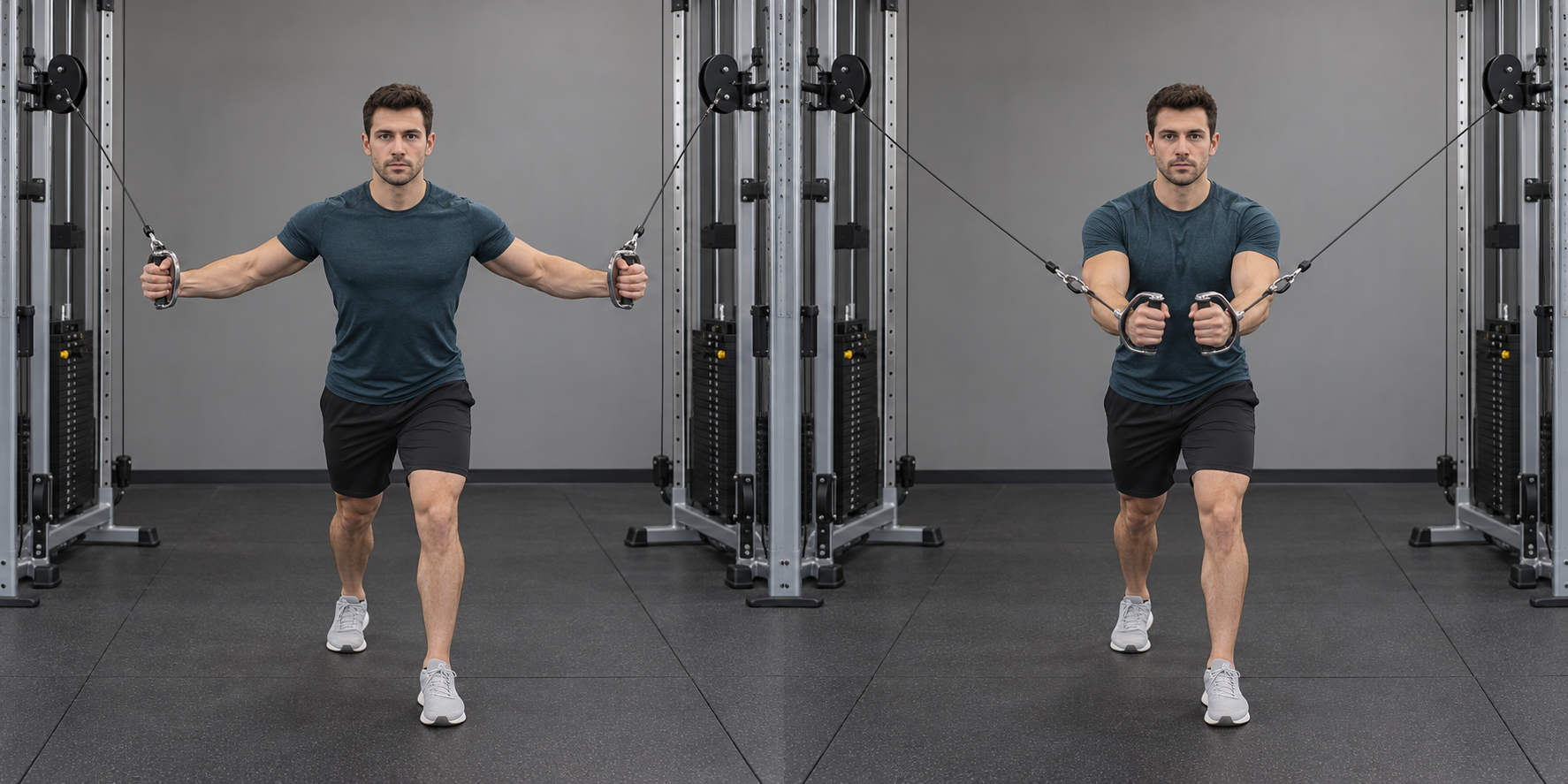
For example, try two light sets of 10–15 controlled repetitions to begin. This is an adjustable learning suggestion. Pick a load that preserves the same arm path even in the final repetitions, then progress in small steps. Kilogram labels on different machines are not directly comparable because pulley ratios and friction vary.
These errors change your cable flys
Your flys become a press
If you bend your elbows deeply on the way out and straighten them in front, you increasingly perform a press. Reduce the load and practise the arc with a fairly constant bend.
Opening too far backwards
More stretch is not a goal by itself. Stop sooner if your shoulders tip forwards, you push your ribcage out or cannot brake the return. Someone else’s end position is not a target for your shoulders.
Using momentum from your body
If your knees bounce or your torso shifts forwards on each repetition, check the load first. Your feet and trunk should provide a stable base rather than a run-up.
High or low pulley: master one version first
A high pulley with a downward arc or a low pulley with an upward arc changes the direction of pull. These are different variations rather than automatic improvements. Change one setting at a time and start light again. The angle alone guarantees neither complete isolation of the “inner chest” nor muscle growth.
Cable flys and bench pressing serve different roles. Flys bring your arms together; pressing combines elbow and shoulder movement in a push. If you first need to choose between a machine, barbell or dumbbells, use the existing buying comparison.
Chest press or bench press: choose your pressing setupSuitable handles: two cost CHF 18.– in total
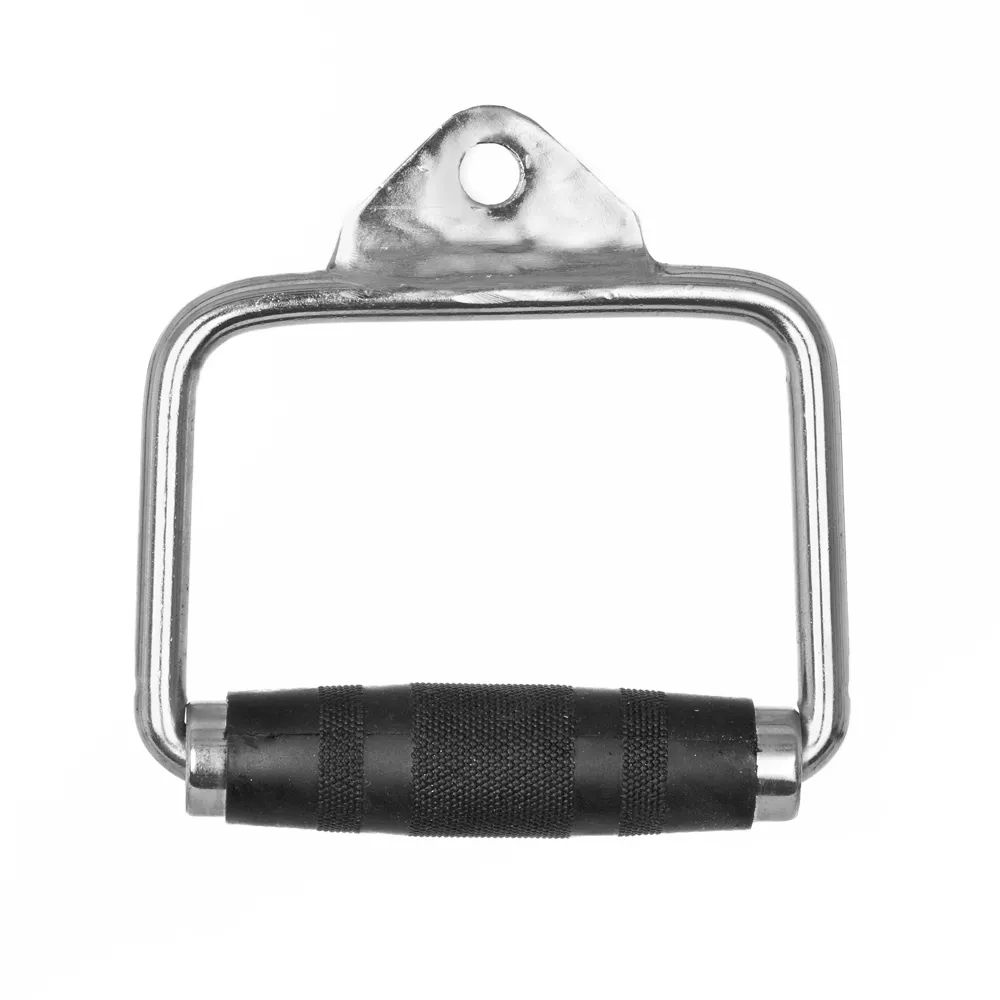
One-Handed Rubber-Coated Cable Cross Handle
CHF 9.– each · CHF 18.– for two
The shop lists a swivel, a rubber grip with a 3 cm diameter and a 14 cm width. The two-arm version shown uses two handles; one is enough to alternate arms. If your station already includes suitable handles, there is no need to buy another pair.
View the handle: check quantity and connectorCHF 18.– covers the two handles only. The cable station, required connectors and any shipping charges are not automatically included. Check the attachment, approval and package contents, especially for proprietary digital systems. Original shop photo and verified specifications, without a hands-on product test. Price checked 29.10.2026.
Check digital cable machines and required equipmentFrequently Asked Questions
Cable flys: common questions
How high should I set the pulleys?
For this version, set both equally, a little above shoulder height. Use a light load to check a clear, comfortable arc. High and low pulley positions are different variations rather than automatically better setups.
How far back should I open my arms?
Only to your comfortable, controlled limit. You do not need to bring your hands behind your body. If your shoulder position changes or the cables pull you backwards, reduce the range and the load if needed.
Should my elbows stay fully straight?
No. Keep a slight bend and a fairly constant angle. Deep bending on the way out followed by straightening in front shifts the movement towards a chest press.
Do I need to cross my hands?
No. Bring them together under control in front of your chest. Crossing far over is neither required nor evidence of better chest training. Avoid banging the handles together.
Can I do flys with one cable outlet?
Yes, one arm at a time. Keep your trunk still and choose a controllable load. The simultaneous two-arm version needs two separate sideways pulls, rather than two handles on one cable.
Does CHF 9.– buy a pair of handles?
No. The Cable Cross single handle costs CHF 9.– each, or CHF 18.– for two. One is enough for the single-arm version. Before buying, check whether your station already includes suitable handles and connectors.
Source and context
The basic movement with two pulleys a little above shoulder height, slightly bent arms and controlled closing is checked against ACE. Setup, variation, error and learning-volume guidance is our practical interpretation. This establishes neither superiority over bench pressing nor a compulsory range for everyone.
Your cable station is ready: choose handles that fit
If handles are all that is missing, check two compatible singles before buying another station. A single outlet lets you alternate sides with one handle. If you are unsure about the connector, show us your machine and we will help identify the accessories you actually need.