


Fitness Flohmarkt · Guide
Bulgarian split squats: rear-foot support, distance and technique
In a Bulgarian split squat, your front foot stays on the floor while your rear foot rests on a raised support. The setup determines whether you lower under control or struggle for balance. This guide takes you through the support, distance and movement, starting without added weight.
In short
Choose a stable, non-slip support and keep your feet laterally offset around hip width. Place your rear foot, find a suitable distance and lower your rear knee towards the floor under control. Keep your whole front foot loaded. Push up mainly through your front leg while your rear leg supports the position.
1. Check support height and stability
The support must not tip or slide when you place your foot or lower yourself. Check assembly, manufacturer guidance and a suitable foot-contact surface. A rolling chair or loosely stacked objects are not suitable learning setups. A load rating alone does not settle every question about using something as a rear-foot support.
A knee-height bench is a common example rather than a requirement. A lower suitable support may work better for early practice. It should not force a large back arch or uncomfortable tension at your hip or foot. If simply holding the position is difficult, start with a regular split squat with both feet on the floor.
Compare step heights and setup separately2. Set your distance and rear-foot position
Stand in front of the support and rest the top of one foot on it. Keep your feet offset like two rails rather than a tightrope. Find your distance with a slow, shallow practice repetition: your whole front foot stays down, your hips lower under control and you can rise without momentum.
A fixed stride length in centimetres does not suit everyone. Too close may push you onto your toes; too far can make lowering unnecessarily awkward. Adjust between attempts rather than hopping around under load. Light hand support on a fixed object can help while learning.
3. Lower, load your front foot and stand up
Brace your trunk and lower your rear knee towards the floor under control. Your front knee roughly follows your toes; keep the whole foot loaded. A slight forward torso lean is fine while you control your back and pelvis. Do not force a perfectly vertical torso or a fixed knee boundary at your toes.
Use only a depth you can control; your rear knee does not need to touch the floor. Push your front foot into the ground and rise calmly. Your rear leg helps maintain the position rather than being completely unloaded. After the set, step out under control and practise both sides.
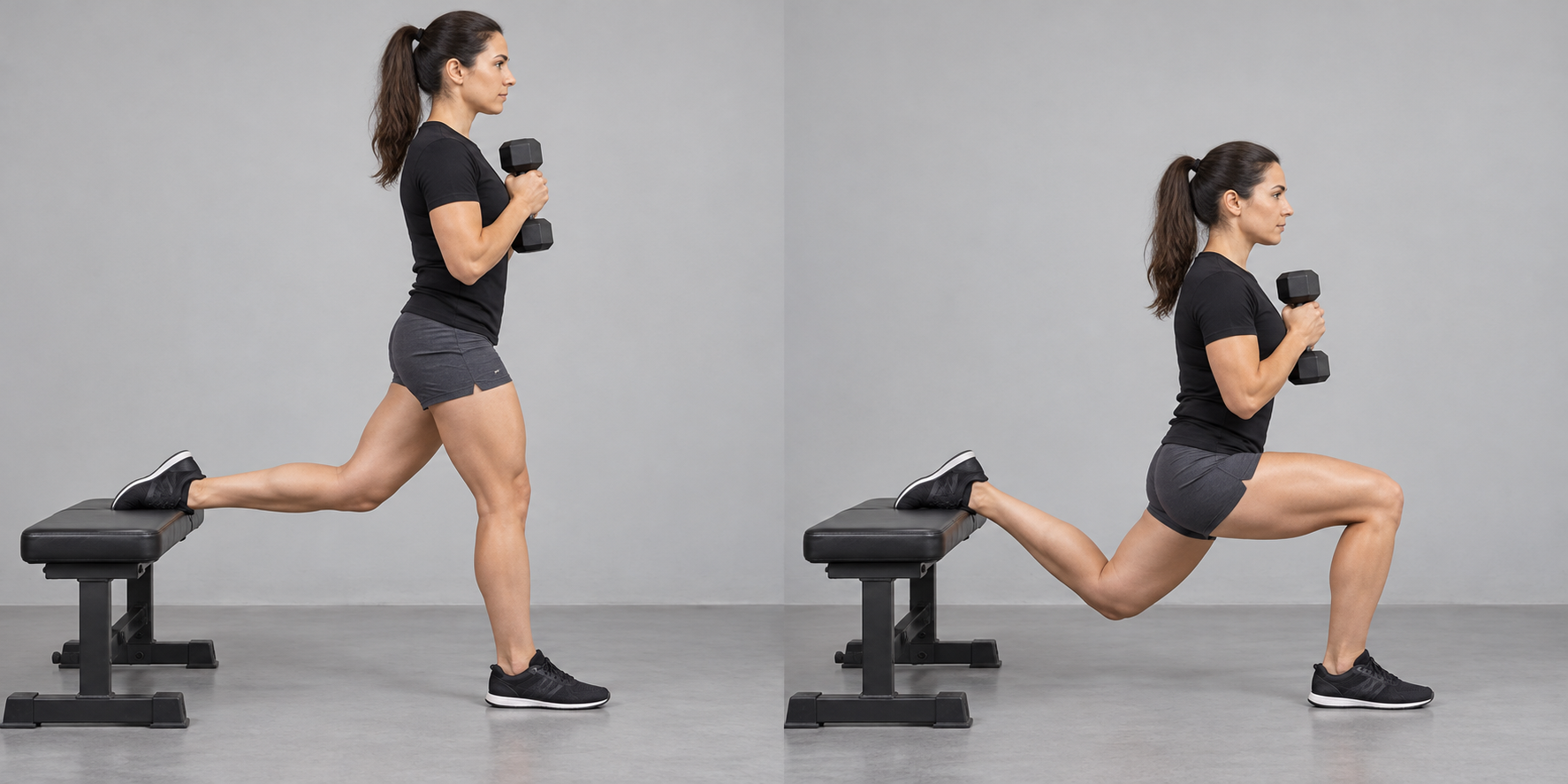
Correct these setup mistakes first
You tip sideways: check lateral stance width and start without a dumbbell. Fixed hand support can reduce the balance demand.
Your front heel lifts: check distance and depth. Keep your whole foot loaded rather than rescuing the repetition with momentum.
Your rear foot or hip feels uncomfortably stretched: check support height and position and choose an easier variation if needed. Stop if there is pain.
Add weight once you control the setup
Bodyweight is often enough for learning. Once your setup and movement are repeatable, you can hold a suitable dumbbell close to your chest. Two dumbbells at your sides are another option but require a secure grip and controlled entry and exit. Increase only while maintaining technique; no fixed weight suits everyone.
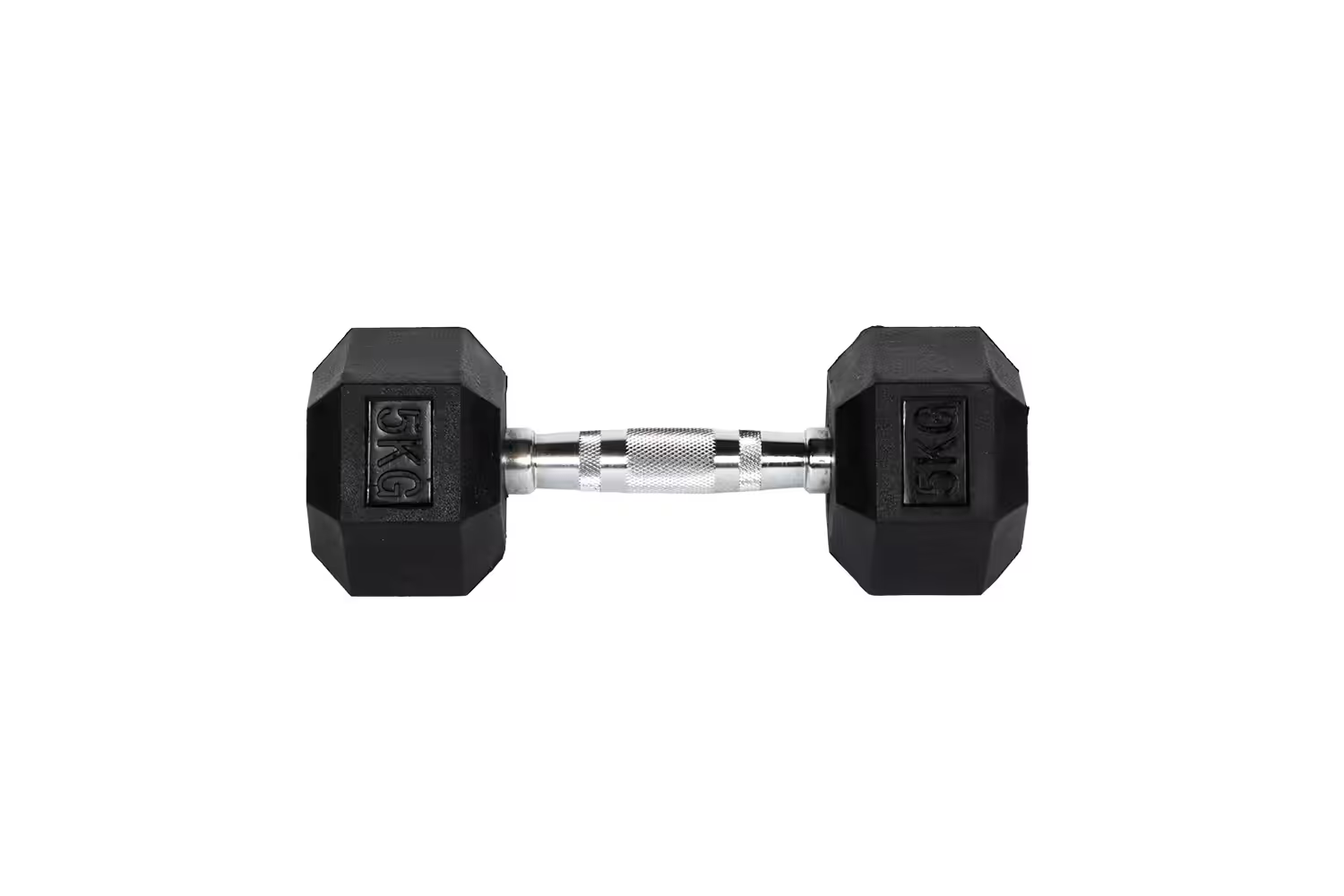
Hex Dumbbell as a suitable added load
From CHF 3.– each
The shop lists hex dumbbells from 1 to 60 kg, priced individually. One suitable dumbbell is enough for the chest-held version; two at your sides require matching weights. The starting price is not a recommendation for your training load.
Choose a suitable hex dumbbellOriginal shop photo and verified specifications, without a hands-on product test. Price checked 28.10.2026.
Bulgarian split squat, step-up or full-body plan?
In a Bulgarian split squat, the front foot stays on the floor and the rear foot on the support. A step-up lifts you onto a step with the working leg. These are different movements requiring appropriate setups. This article covers one exercise; exercise choice and order for a dumbbell full-body plan stay in the existing guide.
See the dumbbell full-body planFrequently Asked Questions
Bulgarian split squats: common questions
How high should the Bulgarian split-squat support be?
There is no compulsory height for everyone. A knee-height bench is common; a lower suitable support may work better initially. Stability, controlled movement and a comfortable foot and hip position matter.
How far should my front foot be from the bench?
Find your distance using slow, shallow practice repetitions without a dumbbell. Your whole front foot stays down and you lower and rise calmly. A fixed measurement does not suit every leg length and support height.
Does my rear knee need to touch the floor?
No. Lower only while controlling posture and balance. Your rear knee moves towards the floor without needing to touch it.
Which leg works in a Bulgarian split squat?
Your front leg does most of the work, particularly the thigh and glutes. Your rear leg supports the position rather than being completely unloaded.
Can I learn Bulgarian split squats without dumbbells?
Yes. Start without added weight and use light hand support on a fixed object if needed. Practise with both feet on the floor first if the elevated setup is already too difficult.
Are Bulgarian split squats the same as step-ups?
No. Here your front foot stays on the floor while your rear foot is elevated. A step-up lifts the working leg onto a step. Support, movement path and balance demands differ.
Source and context
The basic movement was checked against ACE’s exercise guide. ACE shows a roughly knee-height bench and a dumbbell at the chest. Our learning adjustments start without added weight and, where appropriate, with a lower suitable support. These guidelines do not replace individual technique assessment.
Find a stable setup, then add suitable weight
Once you control the movement without added weight, choose a suitable hex dumbbell. Unsure about equipment? Ask us about your support, space and weight before ordering so your purchase fits your actual setup.