


Fitness Flohmarkt · Guide
Safety Squat Bar: when this specialist bar earns its place at home
Squats fit your training plan, but gripping a straight bar behind you is awkward? A Safety Squat Bar brings your hands forwards and spreads contact over padding. Find out whether it solves your actual problem, fits your rack and makes the CHF 140.– worthwhile in your home gym.
In short
A Safety Squat Bar mainly complements an already suitable squat setup: you hold the front handles instead of reaching behind your shoulders. Its curved shape changes the balance, so your usual straight-bar load is not a starting weight. Our model costs CHF 140.–, weighs 20 kg and has 50 mm sleeves. You need a rack with safety supports, plates and collars separately.
What does a Safety Squat Bar change in a squat?
With a straight bar, your hands reach behind your body. With a Safety Squat Bar, you hold two forward-facing handles. This can make the grip position more comfortable if reaching back is difficult. The padded support should sit evenly over the upper shoulders without pressing on your neck, slipping or forcing a painful position.
The offset sleeves change how the load balances. A more upright torso is possible, but it is not automatic for every person and bar. In a small study involving 14 trained adults, the torso was more upright with the safety bar, while the three-repetition maximum load was lower than with the straight-bar variants. This does not demonstrate fewer injuries and is not a test of our shop model.
The name “Safety” does not make unsupported maximum attempts safe. The load still rests on your shoulders and your trunk must control it. If you have pain, address the cause rather than training through it with another bar.
Who benefits, and when is a straight bar enough?
It makes sense if you squat regularly, your rack already fits and you specifically want a forward grip or another squat variation. For a first setup, a suitable rack with safety supports, appropriate plates and a versatile bar usually come first. If straight-bar squats feel comfortable and controlled, you do not need a specialist bar.
Are you actually looking for a bar for lifting from the floor? A hex bar is the more relevant equipment family. A Safety Squat Bar replaces neither a hex bar nor a straight bar for bench presses and deadlifts.
Will the Safety Squat Bar fit your rack?
An overall length of 220 cm does not guarantee a correct fit. The key measurement is the spacing between your two J-hooks, the bar supports: both must support straight, unpadded sections. Bends, padding and rotating sleeves must not sit on the hooks. Also check support-surface width and clearance from the rack uprights.
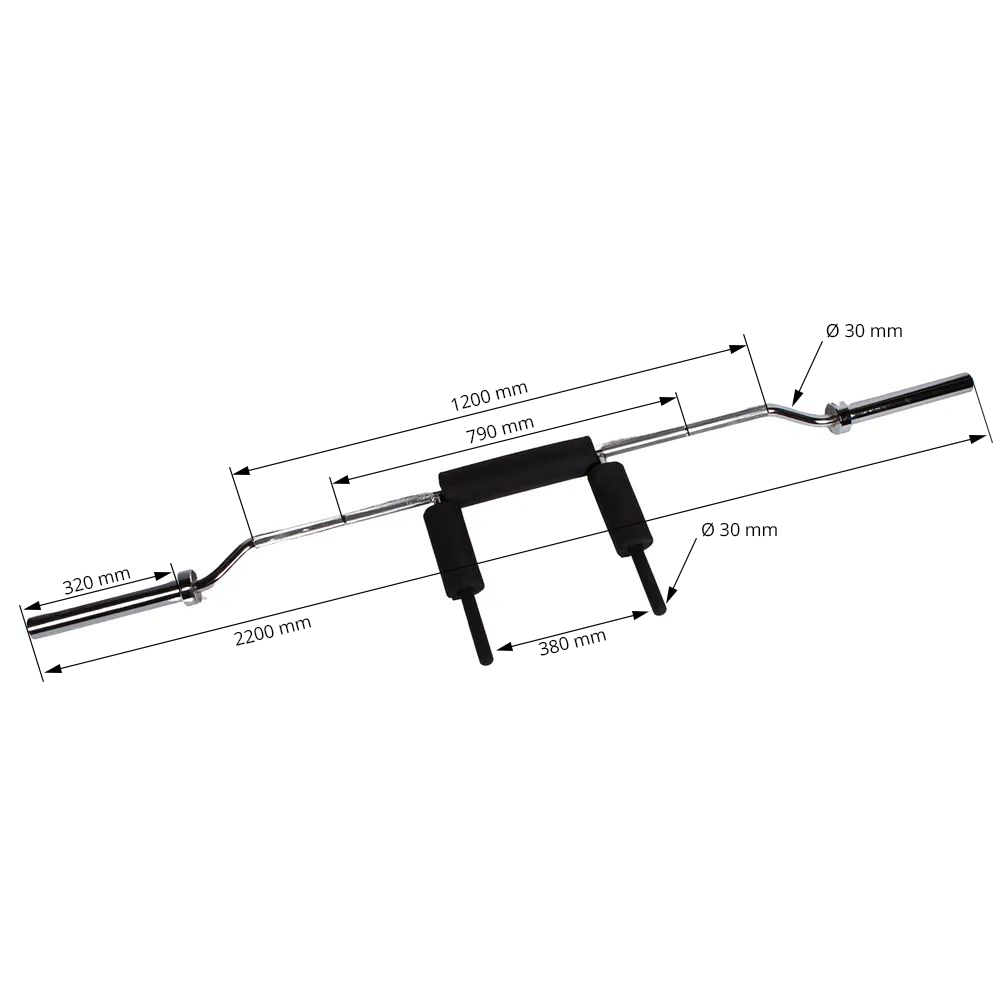
Safety supports must suit the rack, have adequate capacity and be able to catch the bar if you stop a repetition. Test their height and contact using the bar without plates. Allow space for the forward handles, movement inside the rack and loading plates from the sides. If fit is unclear, send us your rack model, hook spacing and photos before ordering.
Our Safety Squat Bar: CHF 140.– alongside your existing setup

Safety Squat Bar | Barbell 50 mm
- CHF 140.–
- 20 kg
- 220 cm
- Ø 50 mm
- Listed maximum load: 350 kg
You receive a chrome steel bar with padding and fixed handles. Product data lists 32 cm of plate sleeve per side and rotating sleeves with needle bearings. Support fit, grip comfort and your rack matter most when choosing. The 350 kg figure is the bar’s declared load limit, not approval for your entire setup.
View the Safety Squat Bar for CHF 140.–The listed package contains one bar. Collars are explicitly excluded; plan plates, a rack and safety supports separately too. If you already have a suitable setup with 50 mm plates and compatible collars, CHF 140.– is the additional bar cost. Missing accessories increase the total. This bar is not rated for dropping, even when fitted with bumper plates.
Our existing system guide explains the general choice between 30 and 50 mm. This guide focuses on the specialist bar rather than repeating basic equipment advice.
Read the bar and plate system guide
Price as of 27.10.2026, including VAT and excluding delivery. Data and original photos come from our shop. This guide provides editorial guidance, not our own load test or comparative product test.
First squats: learn the balance and choose your load afresh
Start without additional plates. The empty bar already weighs 20 kg; if that is too much, it is not a light starting option for you. Set both hooks to the same height so you can lift the bar out with a small leg extension. First test the safety supports without plates. Centre the padding evenly, take both handles and keep your hands on them throughout the movement.
Step back only far enough to squat freely. Find a stable stance and descend under control to a depth from which you can return steadily. Do not pull hard on the handles to mask the bar tipping. If the padding shifts, your torso collapses or pain occurs, stop and check the setup and technique. Add a small load only once unracking, squatting and reracking are controlled, equally on both sides and secured with suitable collars.
Frequently Asked Questions
Safety Squat Bar: key questions answered
What is a Safety Squat Bar useful for?
The front handles change arm position so you do not need to reach behind your shoulders. Padding and the curved shape alter support and balance. It complements squat training rather than replacing a complete, suitable rack setup.
Is a Safety Squat Bar automatically easier on your back?
No. A more upright torso is possible, but the load remains on your shoulders and must be controlled. That does not guarantee less pain or fewer injuries. Address symptoms rather than simply switching bars.
Does every Safety Squat Bar fit every rack?
No. Check hook spacing, straight unpadded support sections, safety supports and movement clearance. A total length of 220 cm alone does not confirm fit. If unsure, check your rack model, measurements and photos with us before buying.
How much does the bar weigh, and how should I start?
Our model weighs 20 kg according to product data. Start without plates to learn the new balance. If 20 kg is already too much, choose a lighter starting option. Do not automatically copy your straight-bar working load.
What do I need in addition to the Safety Squat Bar?
A suitable rack with appropriate safety supports, 50 mm plates and compatible collars. The listed package includes one bar without collars. Additional plates and a rack are not included in the CHF 140.– bar price.
Can I drop the Safety Squat Bar?
Our model is not rated for dropping according to product data. Bumper plates do not change that rating. Train under control with correctly set safety supports and do not plan to drop the bar.
Check the fit, then add the bar
Your rack fits, you have 50 mm plates and want a forward grip for squats? Our CHF 140.– Safety Squat Bar is then a manageable addition. If support fit or grip comfort is unclear, check with us before ordering.
Research on differences in squat mechanics:
Kristiansen et al. (2021): Safety-Bar, High-Bar and Low-Bar Squat