


Fitness Flohmarkt · Guide
Cable lateral raise: pulling angle and technique
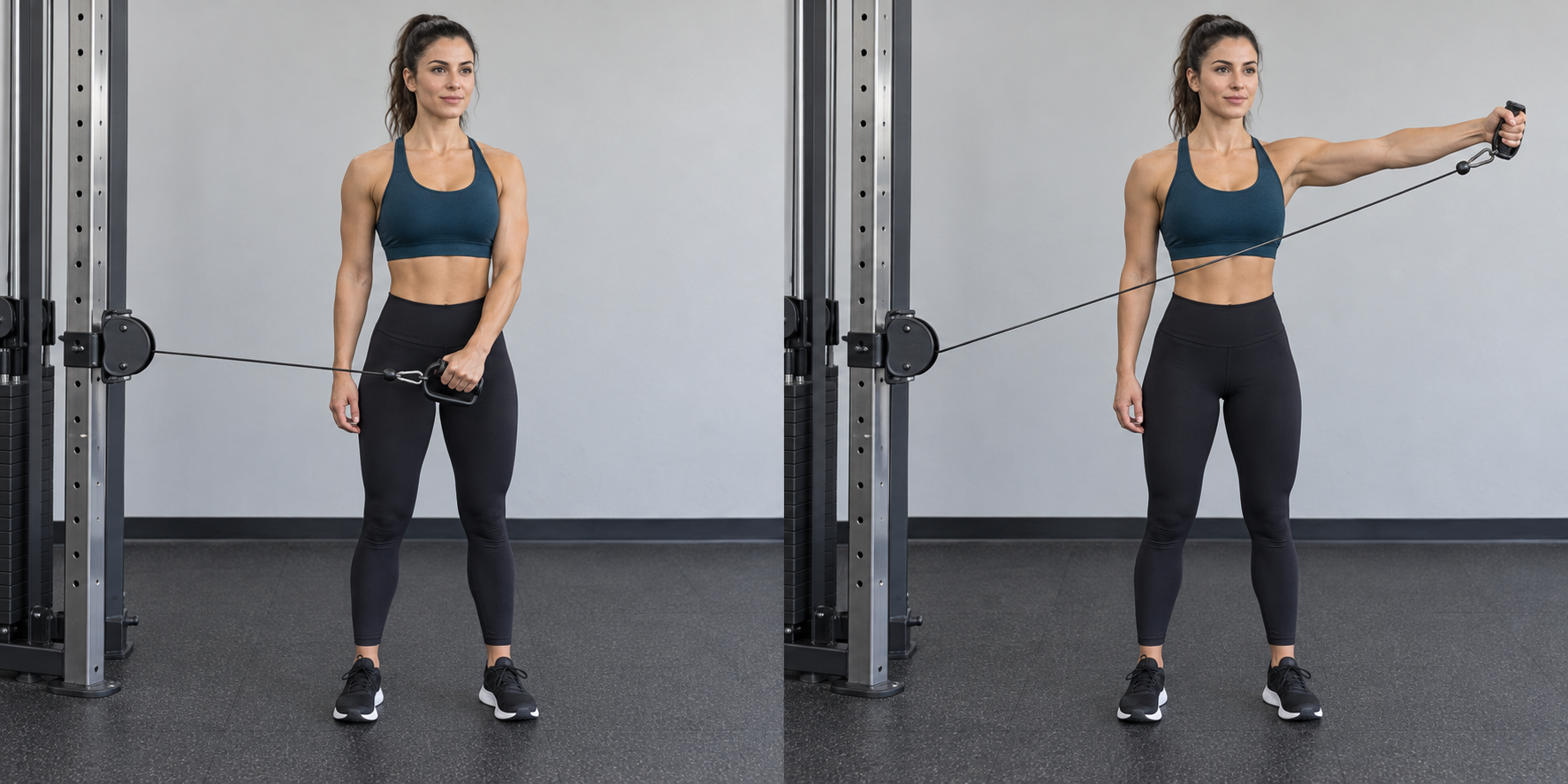
In a cable lateral raise, your arm lifts sideways against an angled pull. Pulley height and your distance from it noticeably change how the exercise feels. This guide builds a controlled single-arm setup, from attaching the handle to lowering calmly.
In short
Stand side-on and hold the handle with your farther hand. Let the cable pass freely in front of your body. Raise your slightly bent arm outwards to around shoulder height or your comfortable limit. Keep your trunk stable and control the return towards the pulley.
Cable lateral raise: height, distance and cable path
The side of your shoulder does a substantial share of the lifting. Other shoulder and shoulder-blade muscles contribute while your trunk stabilises. This is more than a hand movement. Use a suitable stable station, compatible single handle and closed connector. Check the pulley lock and clear cable path before your set.
Which pulley height should you use?
ACE places the pulley around hip height, which is the version illustrated here. The cable already pulls clearly sideways at the start. A low pulley is another variation that changes the pulling angle. No position is automatically best for everyone. Test the start, top and return using a light load.
Face your nearer side towards the pulley and hold the handle in the other hand in front of your pelvis. Step away only enough to clear the cable and retain sufficient travel. It should neither rub your leg nor pull you off balance. Greater distance does not mean better technique.
Cable force and shoulder loading are different
The cable pulls along its own line. Arm position, pulley height and distance also change its lever arm about your shoulder. Steady handle tension therefore does not mean identical shoulder demand at every angle. Compare loads on the same machine with the same setup; pulley ratios and friction vary.
The single-arm movement, step by step
- Find a stable stance with soft knees. Keep your trunk upright without leaning away. Your free arm may lightly touch a suitable fixed support.
- Keep a slight, fairly constant elbow bend. Keep wrist and forearm comfortably aligned rather than deliberately tipping your little finger upwards.
- Move your upper arm out to the side, slightly in front of your body if appropriate. Stop around shoulder height or sooner at your controlled limit. Allow your shoulder blades to move with the arm.
- Return the handle slowly in front of your pelvis. Avoid crashing the stack or letting the cable snap back. Stop if there is pain.
For learning, you could start with two light sets of 10–15 repetitions per side. This is an adaptable starting suggestion rather than a fixed success formula. Increase only while keeping your stance and range consistent. If the next load increment is too large, retain the current load and consolidate technique.
Check these compensations first
Your torso tilts: lower the load and check distance and stance. A shorter controlled range is more useful than a high swing.
You shrug instead of raising your arm: check load and arm path. Do not force your shoulder blades rigidly down; distinguish their normal rotation from a sudden shrug.
The cable rubs your leg or the handle twists: adjust stance and cable path. A swivel can let the handle rotate but cannot guarantee comfort for everyone.
One handle is enough, provided the connector fits
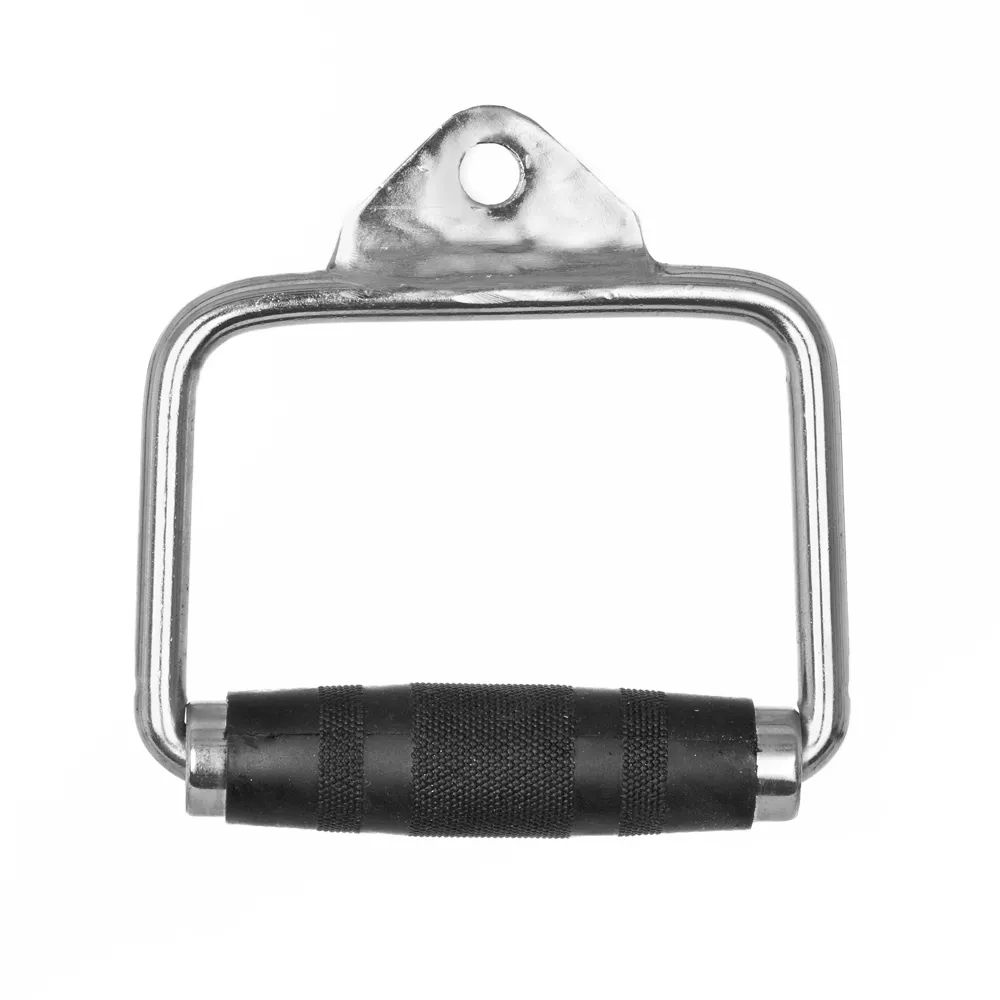
One-Handed Rubber-Coated Cable Cross Handle
CHF 9.– each
The shop lists a swivel, a rubber grip with a 3 cm diameter and a 14 cm width. One handle is enough to alternate sides. It complements an existing station; a cable machine and suitable connector are not automatically included.
Check the handle and connectorOriginal shop photo and verified specifications, without a hands-on product test. Price checked 29.10.2026. Check system approval for digital cable devices; a standard handle does not automatically fit every connector.
Compare digital cable machines and required equipmentLateral raise, face pull or dumbbell variation?
A lateral raise moves your upper arm out sideways. A face pull pulls towards your face with a different arm path and role for the rear shoulder. A dumbbell uses a similar sideways lift but gravity acts vertically rather than along a cable. Equal kilogram figures are therefore not a direct performance comparison.
Learn the separate face-pull movementFrequently Asked Questions
Cable lateral raise: common questions
How high should I set the pulley?
The ACE variation shown starts around hip height. A lower pulley changes the pulling angle. Choose a clear cable path and controllable movement; one fixed height does not suit everyone.
How high should I raise my arm?
Around shoulder height or sooner at your comfortable controlled limit. More height is not compulsory. Avoid forcing the last part through torso momentum or a sudden shrug.
Should my little finger point upwards?
Do not deliberately rotate your hand inwards as if pouring. Keep your wrist and grip comfortable with a slight elbow bend. A forced hand position is not required.
Is cable tension always the same?
It depends on the machine. Even with steady handle force, the lever arm about your shoulder changes with arm position. Shoulder demand is therefore not automatically constant throughout.
How much weight should I use?
Use a load that lets you control stance, elbow angle and return. A fixed kilogram number is not useful across different pulley ratios and training levels. Start low and progress only with repeatable technique.
Do I need two handles for this version?
No. Train one arm, then switch sides. One suitable handle is enough. Check the connector, clear cable path and station approval; the handle alone is not a complete cable machine.
Source and context
The basic single-arm movement with a roughly hip-height pulley is checked against ACE. Distance, leverage and learning-volume explanations are our practical interpretation, not proof of a universally optimal angle or superiority over every dumbbell version.
Add the right accessory to your cable station
If you already have a station, check a compatible single handle first. This version does not require a pair. If you need a cable machine, ask us about installation, minimum load and connector before buying.